































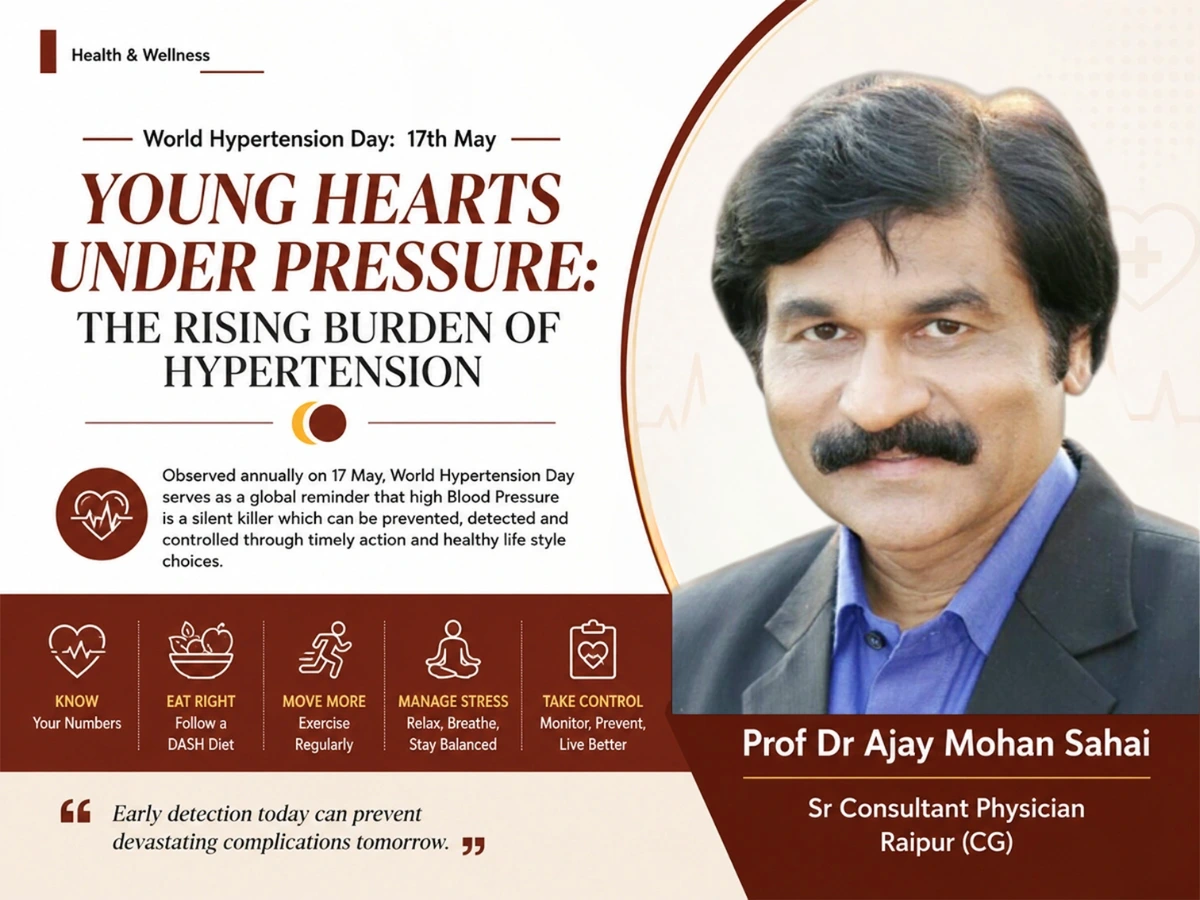
World Hypertension Day: 17th May
Young Hearts Under Pressure: The Rising Burden of Hypertension
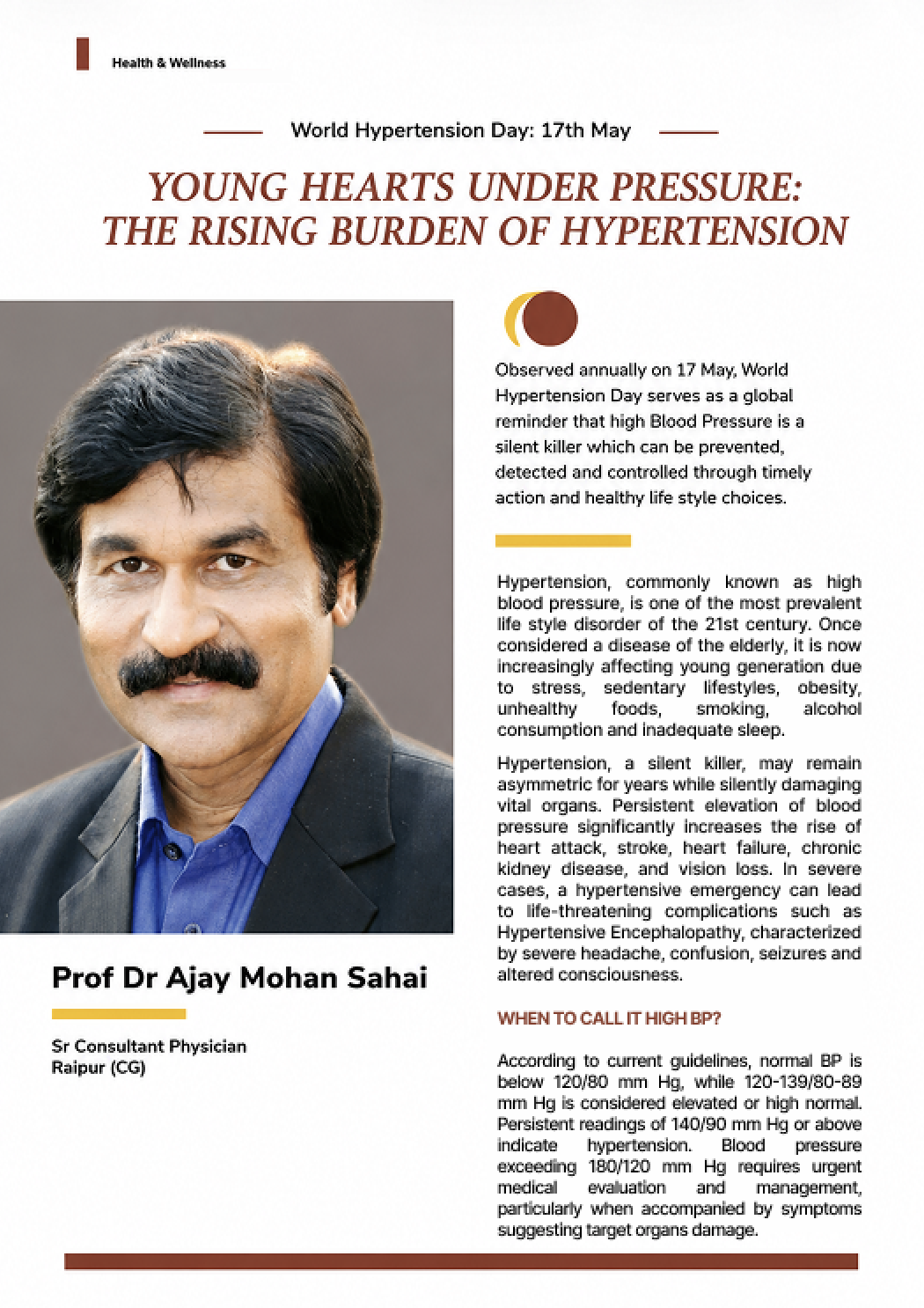
By Prof. Dr. Ajay Mohan Sahai
Senior Consultant Physician Raipur (CG)
Hypertension, commonly known as high blood pressure, is one of the most prevalent life style disorder of the 21st century. Once considered a disease of the elderly, it is now increasingly affecting young generation due to stress, sedentary lifestyles, obesity, unhealthy foods, smoking, alcohol consumption and inadequate sleep.
Hypertension, a silent killer, may remain asymmetric for years while silently damaging vital organs. Persistent elevation of blood pressure significantly increases the rise of heart attack, stroke, heart failure, chronic kidney disease, and vision loss. In severe cases, a hypertensive emergency can lead to life-threatening complications such as Hypertensive Encephalopathy, characterized by severe headache, confusion, seizures and altered consciousness.
WHEN TO CALL IT HIGH BP?
According to current guidelines, normal BP is below 120/80 mm Hg, while 120-139/80-89 mm Hg is considered elevated or high normal. Persistent readings of 140/90 mm Hg or above indicate hypertension. Blood pressure exceeding 180/120 mm Hg requires urgent medical evaluation and management, particularly when accompanied by symptoms suggesting target organs damage.
HOW TO KEEP BP UNDER CONTROL?
Lifestyle modification remains the cornerstone of prevention .It includes Regular physical activity/exercise, weight control, reduced salt intake, a DASH -style diet, stress management and adequate sleep.
When prescribed by your Doctor, , antihypertensive drugs should be taken regularly, as poor adherence is a major cause of uncontrolled blood pressure. Some older medications may contribute to erectile dysfunction/impotency, but patient should never discontinue treatment without consulting their Physician.
DASH DIET
The DASH -style diet stands for Dietary Approaches to Stop Hypertension. It was developed to help lower high blood pressure, but it is also considered a healthy eating plan for overall wellbeing of heart and weight management.
Key Principles of DASH DIET:
Eat more- Fruits, Vegetables,
Whole grains, Beans, Lentils, and Nuts, Low fat or fat free dairy products, Lean proteins such as fish, poultry and legumes.
Limit - Salt/sodium (upto 1 teaspoon of salt per day),
Sugary drinks and sweets, Red and processed meats, Foods high in saturated and trans fats.
Research has shown that the DASH diet can lower BP, reduce the risk of heart diseases and stroke, improve cholesterol levels, support healthy weight loss when combined with calorie control.
WHY REGULAR EXERCISE?
Regular physical activities and excercise is one of the most effective non- drug methods to lower blood pressure and blood sugar level also. For most adults, the aerobic (cardio) exercise is the first choice. Aim should be 150- 300 minutes per week of moderate - intensity activity, or 75-150 minutes per week of vigorous activity. Brisk walking, cycling, swimming, jogging, dancing etc will suffice. Strength (resistance) training, 2-3 sessions per week involving major muscle groups are also very effective. They include light dumbbells, resistance bands, squatting wall push- ups.Flexibility and balance exercises (eg, yoga, stretching exercises and Tai Chi) improve overall fitness but have less direct effect on BP. Breathing exercises- slow deep breathing for 5 to 10 minutes daily may help reduce stress and modestly lower BP.
Exercises should be started gradually, warm up for 5-10 minutes and cool down afterwards . Avoid holding your breath during weight lifting, as this can cause a temporary spike in BP. If BP is very high, seek medical evaluation first.Yoga and Meditation- They can help lower blood pressure, especially when stress, anxiety, poor sleep or mental tension contribute to hypertension.They are complement to- not a substitute for prescribed drugs and other lifestyle measures.
WHAT ABOUT ALCOHOL AND TOBACCO?
Regular or excessive consumption of alcohol is associated with increased risk of developing hypertension. Alcohol also reduces the effectiveness of some antihypertensive medications. It contributes to weight gain, increases the risk of stroke, heart disease and irregular heart rhythms. That's why people with hypertension should limit or stop alcohol consumption,
Tobacco use in any form ( smoking, chewing, vaping nicotine products) is harmful to cardiovascular health. Nicotine causes immediate constriction of blood vessels, temporary rise in BP and Heart rate after each use, damages blood vessel walls, accelerates atherosclerosis, increases the risk of peripheral vascular disease and premature death..
WHEN SHOULD MEDICATION BE STARTED?
When blood pressure remains persistently high, antihypertensive medication is usually required to reduce the risk of heart attack, stroke, kidney disease, heart failure and other complications.