















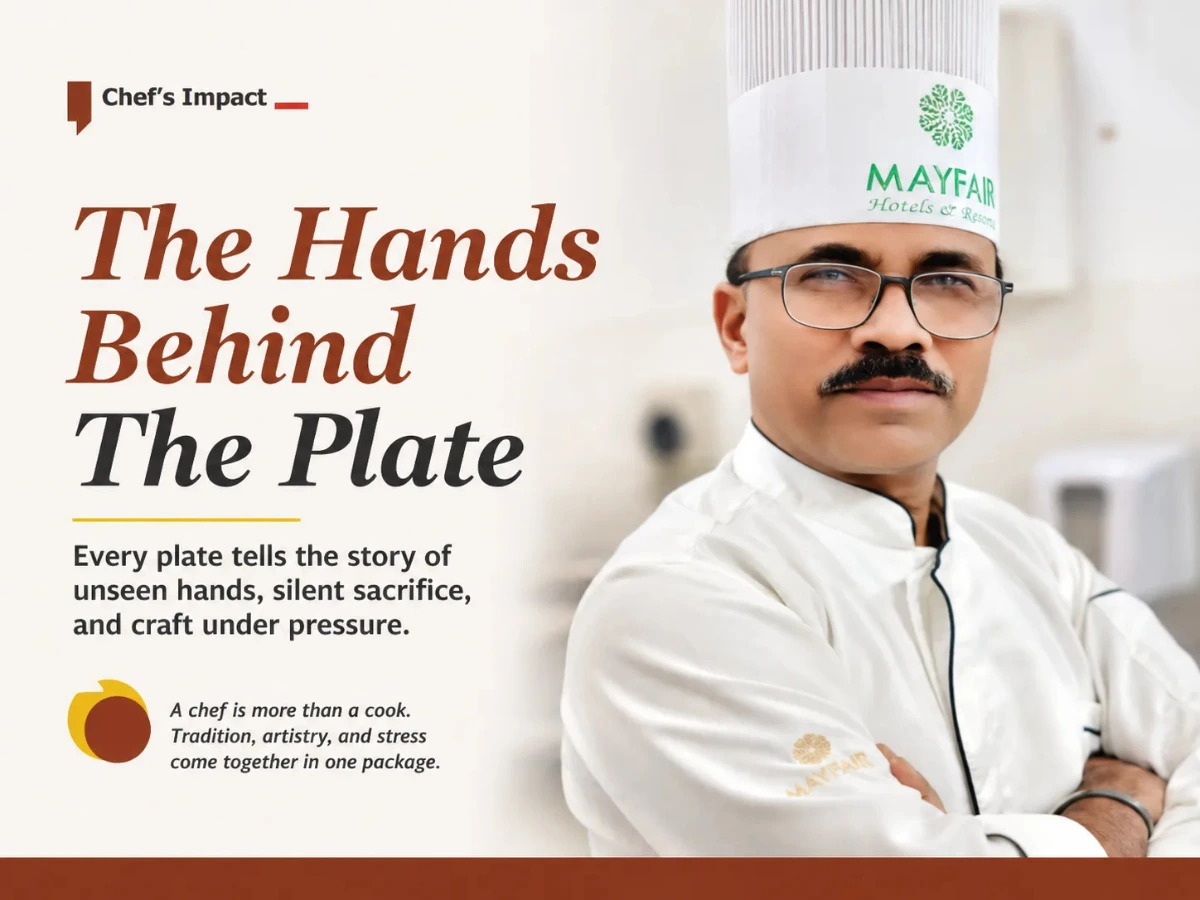



















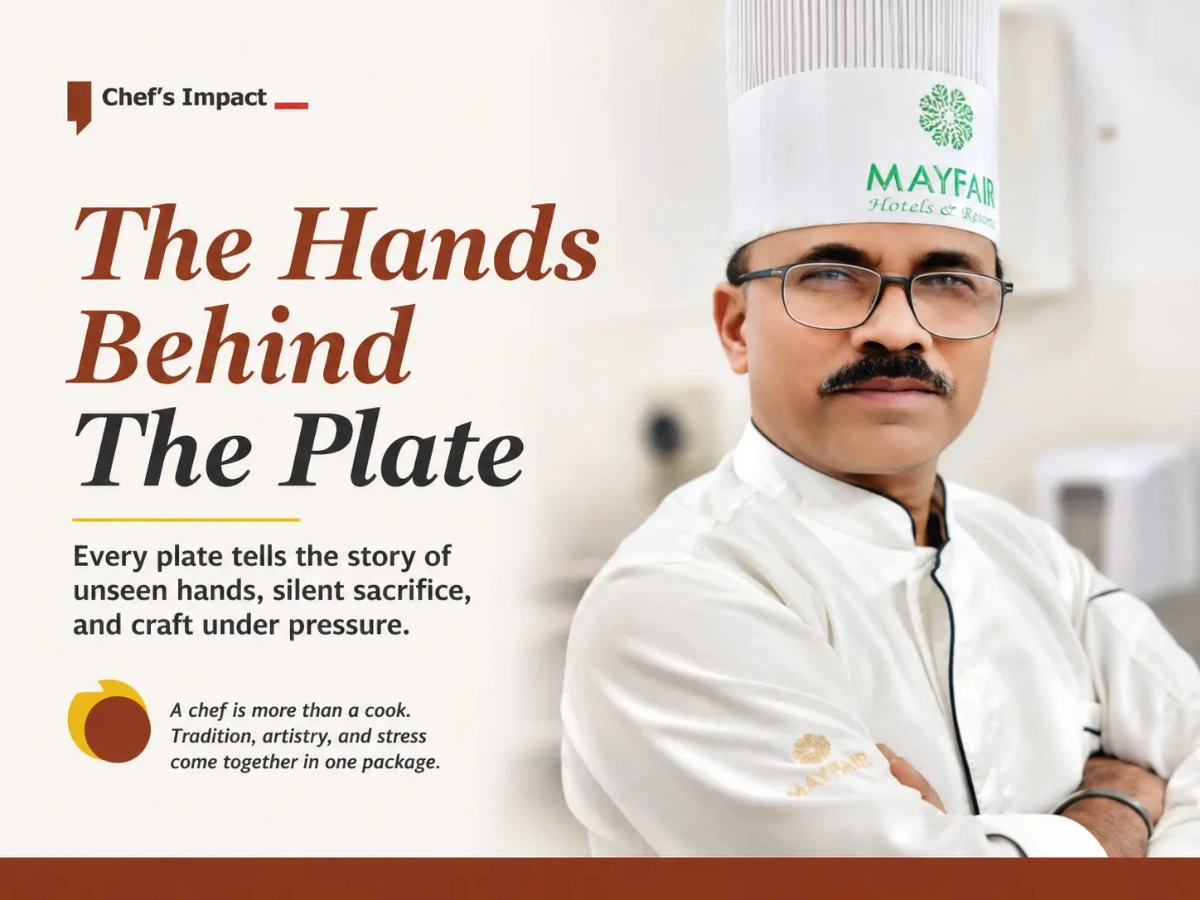
The Hands Behind The Plate
We enter the restaurant, browse through the menu, and know what we want to eat. Food comes in front of us, piping hot, perfectly presented, and well seasoned. We praise the chef, post pictures on social media. Yet, we never stop to think of the hands behind it all.
Every plate tells the story of a person who wakes up before dawn. Someone who works for twelve hours straight in a kitchen hotter than the middle of summer. Someone who gets burns, cuts, bruises on their body but keeps plating their dishes as if it’s a piece of art. Someone who repeats the process a hundred times until perfection.
A chef is more than a cook. Tradition, artistry, and stress come together in one package: smiling through tiredness, working despite criticism, and beginning again the following morning as though nothing happened.
The next time food takes your breath away, pausing you mid-chew, know that there is always a story attached to it. A story of mornings spent early, sacrifices made silently, and a passion for providing good food to others.
Perhaps that is the best ingredient of all.
1. Chef Satyajit, could you start by introducing yourself — where you come from, how the love for cooking first found you, and how that young boy became the chef standing in one of Raipur’s most celebrated kitchens today?
Absolutely. I’m Chef Satyajit, and my journey with food really began long before I ever stepped into a professional kitchen. I come from a family where meals were never just about eating; they were about togetherness, emotion, and tradition. Growing up, I was always fascinated by the aromas coming from the kitchen, watching simple ingredients transform into something that could make people genuinely happy.
As a young boy, I started experimenting out of curiosity — sometimes helping at home, sometimes trying recipes on my own — and slowly realizing that cooking wasn’t just a hobby for me; it was something I deeply connected with.
Over time, that passion turned into discipline. I trained, worked through challenging kitchens, learned from mentors, made mistakes, improved every day, and kept pushing myself to understand not just flavours, but the entire experience of hospitality.
What shaped me most was the belief that food carries stories. Every dish has emotion behind it. That mindset helped me grow from an enthusiastic young boy into the chef I am today, leading a kitchen in Raipur that people have come to celebrate and trust.
I also had the opportunity to work with ITC Hotels for two decades and had the privilege of earning one gold, two silver, and two bronze medals in world culinary competitions.
2. Your journey in hospitality has taken you through some remarkable kitchens. What have been the defining moments or turning points that shaped you — not just as a chef, but as a culinary professional?
Working in different kitchens exposed me to diverse cuisines, service styles, and management cultures. Each environment taught me something unique. Some chefs taught me precision, others taught me creativity, and some taught me resilience.
I still remember the intensity of busy service hours — those moments where timing, communication, and calmness decide the success of the entire dining experience. That pressure built confidence and sharpened my instincts.
Over the years, I learned that being a chef is not only about cooking well. It’s also about leadership, discipline, consistency, and understanding people. Those experiences shaped me not just professionally, but personally as well.
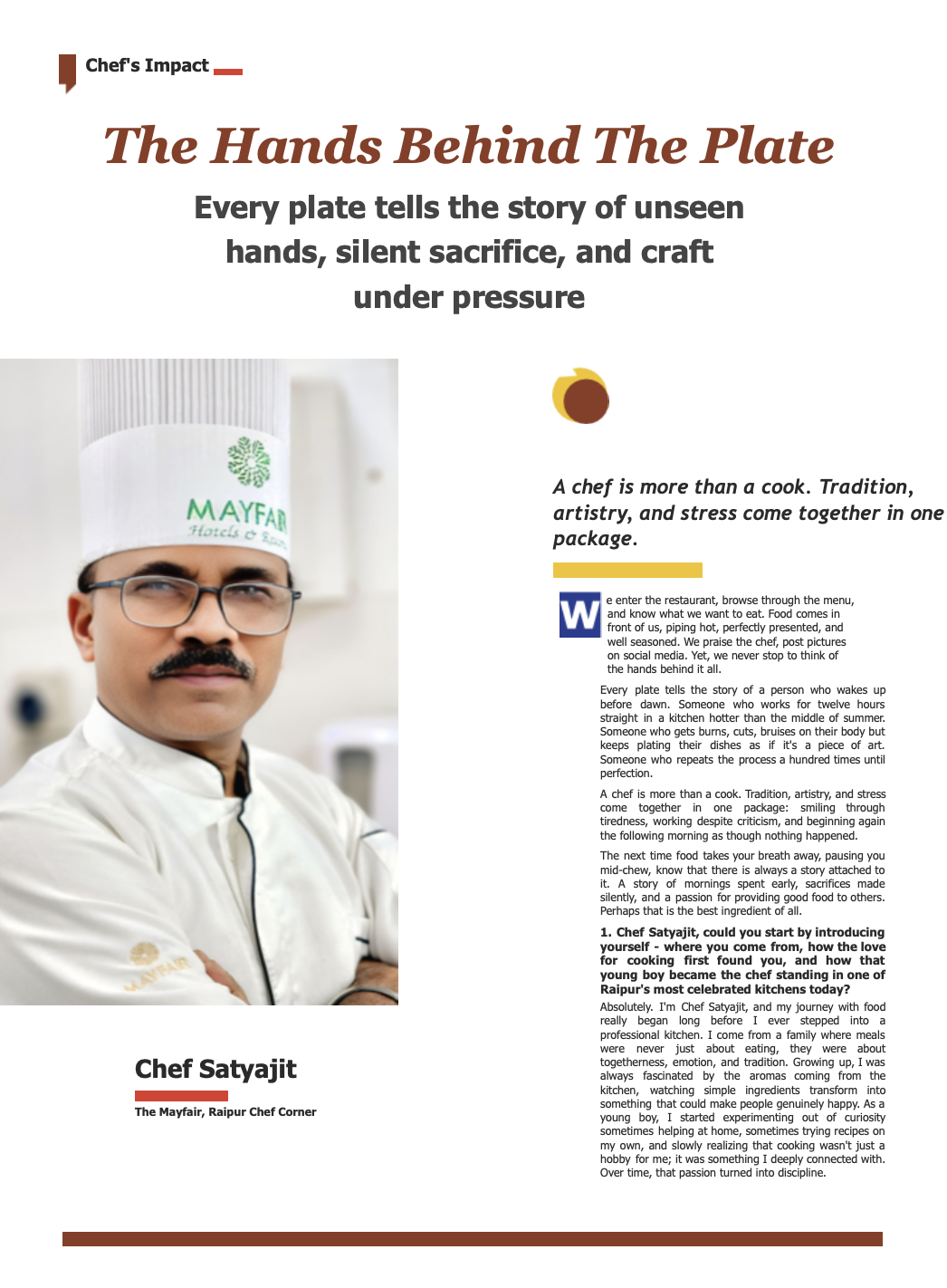
3. You head the kitchen at The Mayfair, Raipur — a property known for its warmth and elegance. How do you translate the spirit of the property and the soul of Chhattisgarh onto the plate?
At The Mayfair, Raipur, the idea is never just to serve good food — it’s to create an experience that reflects the warmth, elegance, and cultural richness the property stands for.
I believe a hotel’s identity should naturally flow onto the plate, and that’s something we consciously work toward every day in the kitchen.
The soul of Chhattisgarh is deeply rooted in simplicity, authenticity, and honest flavors. So while we maintain the refinement and presentation expected from a luxury hospitality space, we also try to preserve the emotional connection that regional food carries.
We draw inspiration from local ingredients, traditional cooking techniques, and native flavor profiles, then present them in a way that feels contemporary yet respectful to the region’s heritage.
4. Every chef has a signature — a dish, a technique, or an ingredient that truly defines their craft. What is yours, and what story does it tell about who you are as a chef?
I think my signature is less about one single dish and more about a philosophy — creating food that feels refined yet deeply comforting.
I’ve always believed that the most memorable dishes are the ones that balance technique with emotion. Anyone can make something visually impressive, but making a guest feel connected to a dish — that’s the real craft.
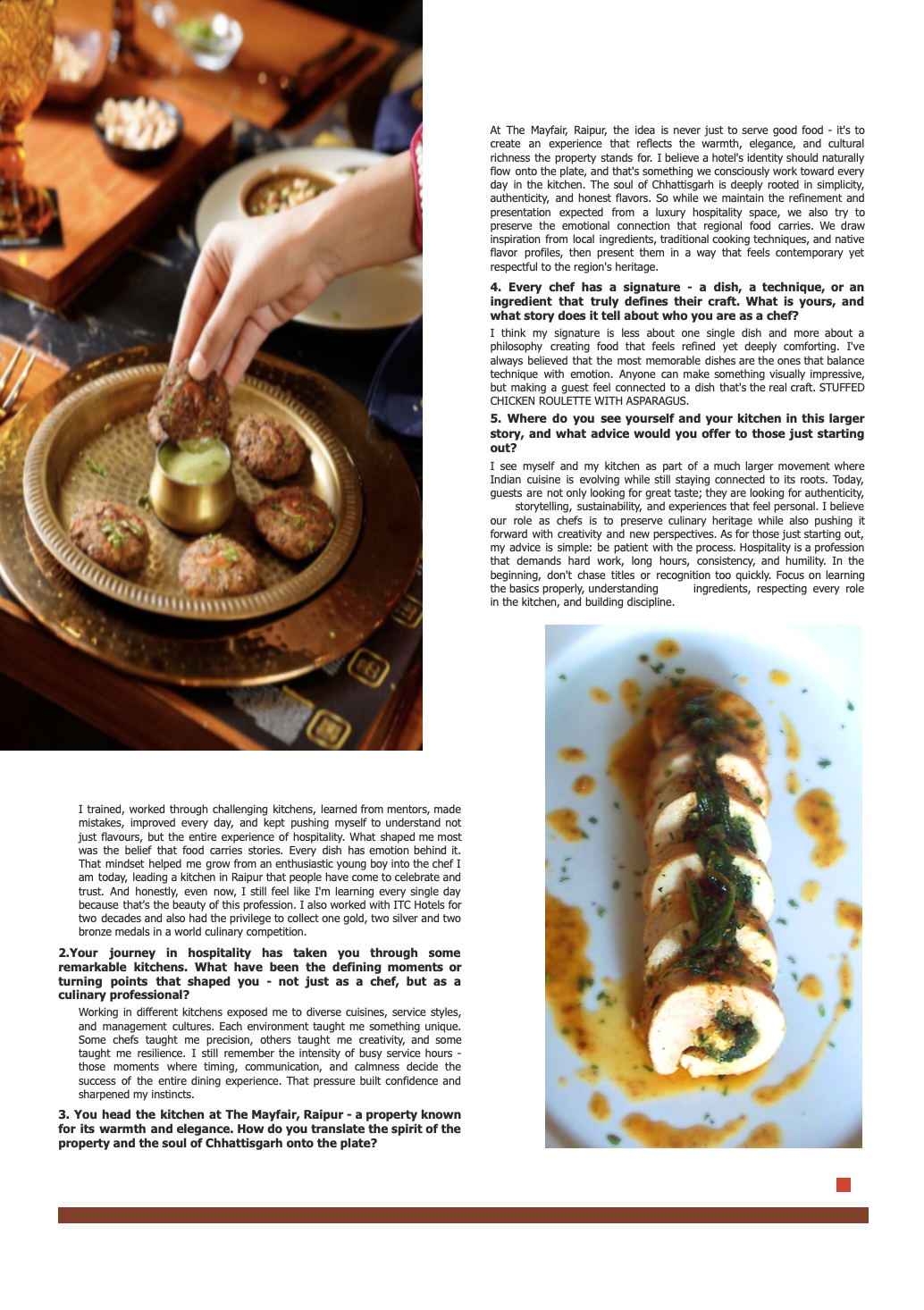
One dish that truly reflects this philosophy is my Stuffed Chicken Roulette with Asparagus. It represents precision, balance, elegance, and comfort all at once, which is exactly how I approach food as a chef.
5. Where do you see yourself and your kitchen in this larger story, and what advice would you offer to those just starting out?
I see myself and my kitchen as part of a much larger movement where Indian cuisine is evolving while still staying connected to its roots.
Today, guests are not only looking for great taste; they are looking for authenticity, storytelling, sustainability, and experiences that feel personal. I believe our role as chefs is to preserve culinary heritage while also pushing it forward with creativity and new perspectives.
As for those just starting out, my advice is simple: be patient with the process.
Hospitality is a profession that demands hard work, long hours, consistency, and humility. In the beginning, don’t chase titles or recognition too quickly. Focus on learning the basics properly, understanding ingredients, respecting every role in the kitchen, and building discipline.
Success in this field doesn’t happen overnight. It comes from showing up every day with passion, curiosity, and the willingness to keep improving.