







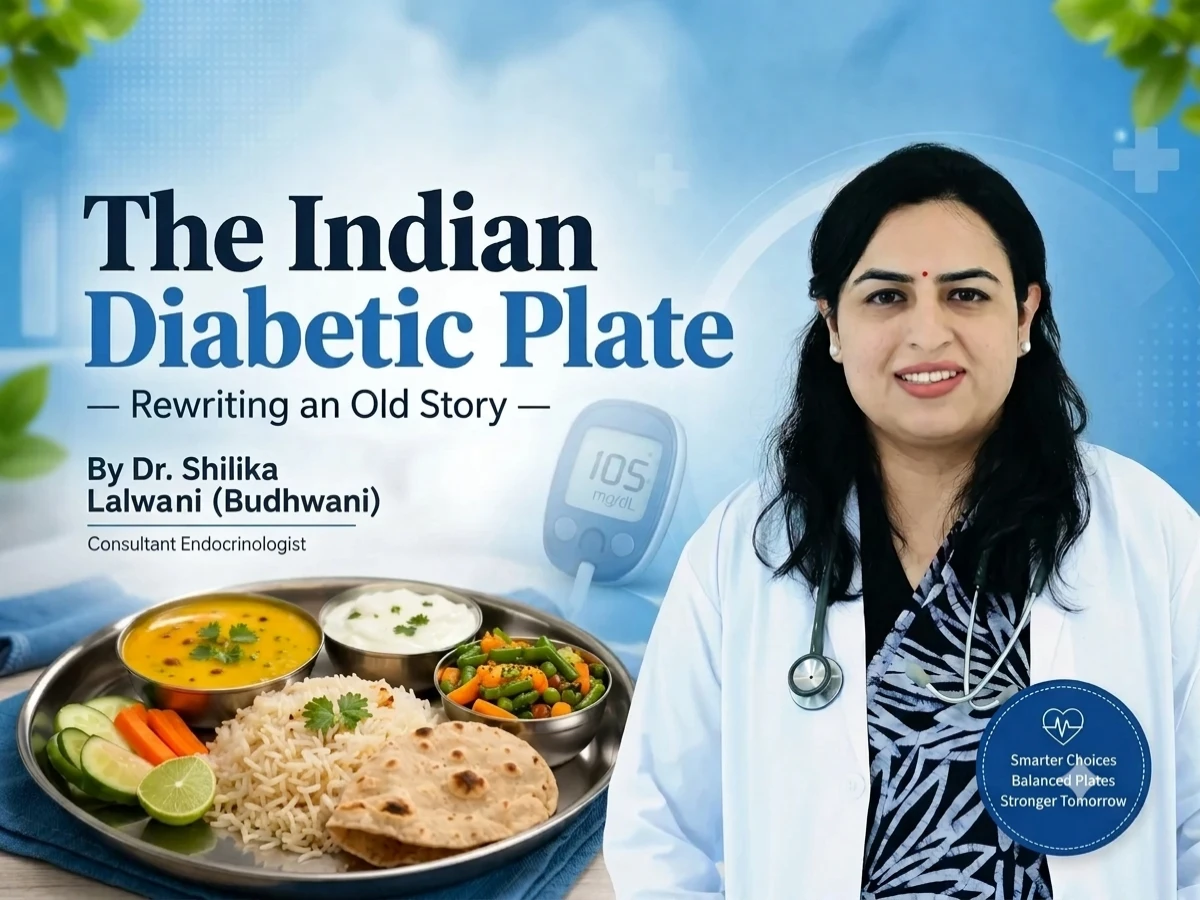



















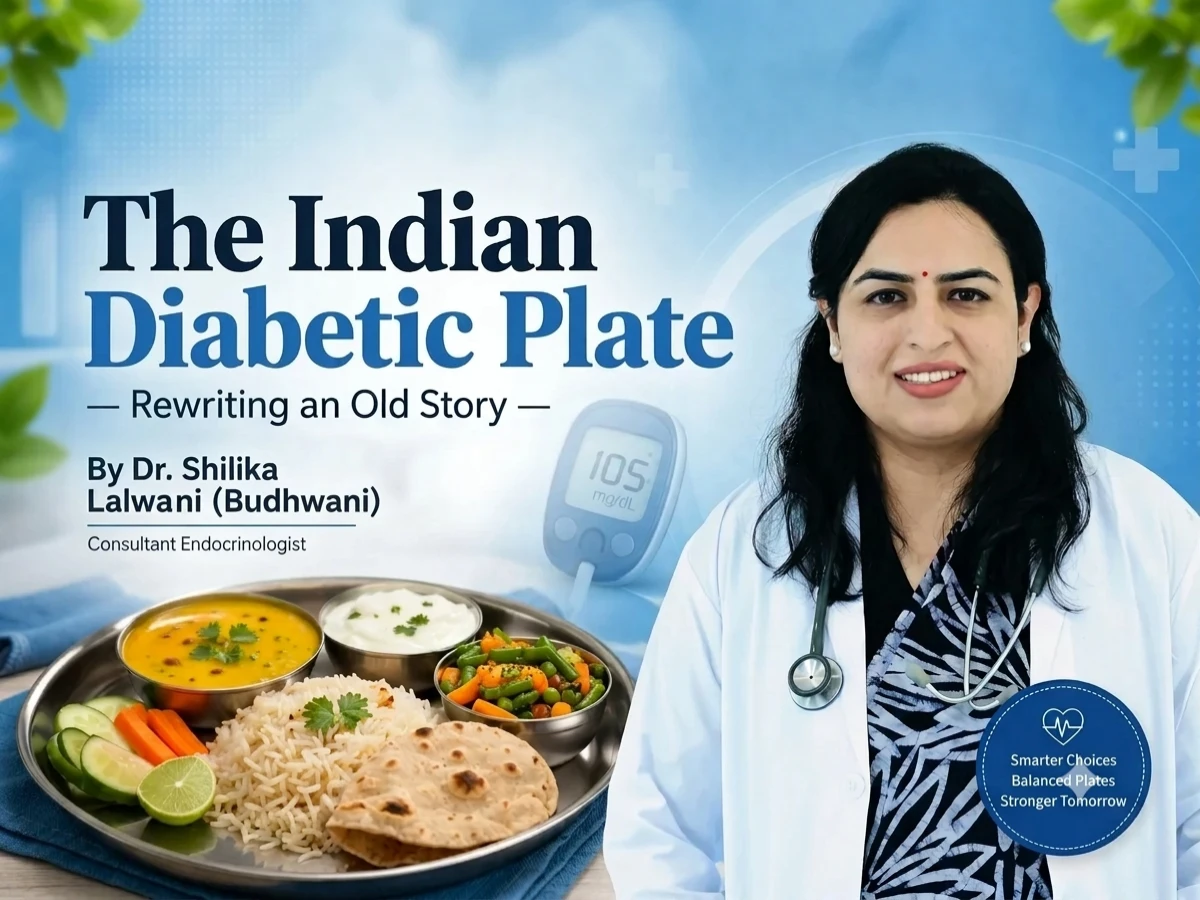
The Indian Diabetic Plate: Rewriting an Old Story
There is something almost tragic about India's relationship with diabetes. We invented the samosa, perfected the thali, and turned sugar into an art form of hospitality — and today we carry, by some estimates, over 100 million people living with diabetes, with an almost equal number teetering on the edge as prediabetics. India, the world diabetes capital, now ranks among the top contributors to the global diabetes burden, and the numbers are still climbing.
But behind the statistics lies a more intimate story — one of confusion at the dining table, guilt at every wedding buffet, and advice so contradictory that most patients simply give up trying to follow any of it.
The Rice Dilemma
Ask any Indian diabetic what troubles them most, and rice or roti will come up within the first sentence. For a South Indian household, a meal without rice barely counts as a meal. For a Punjabi family, roti is not food—it is identity.
The common (and unhelpful) advice to "just stop eating carbs" ignores centuries of culinary culture and, frankly, doesn't work.
The real answer lies not in elimination but in composition.
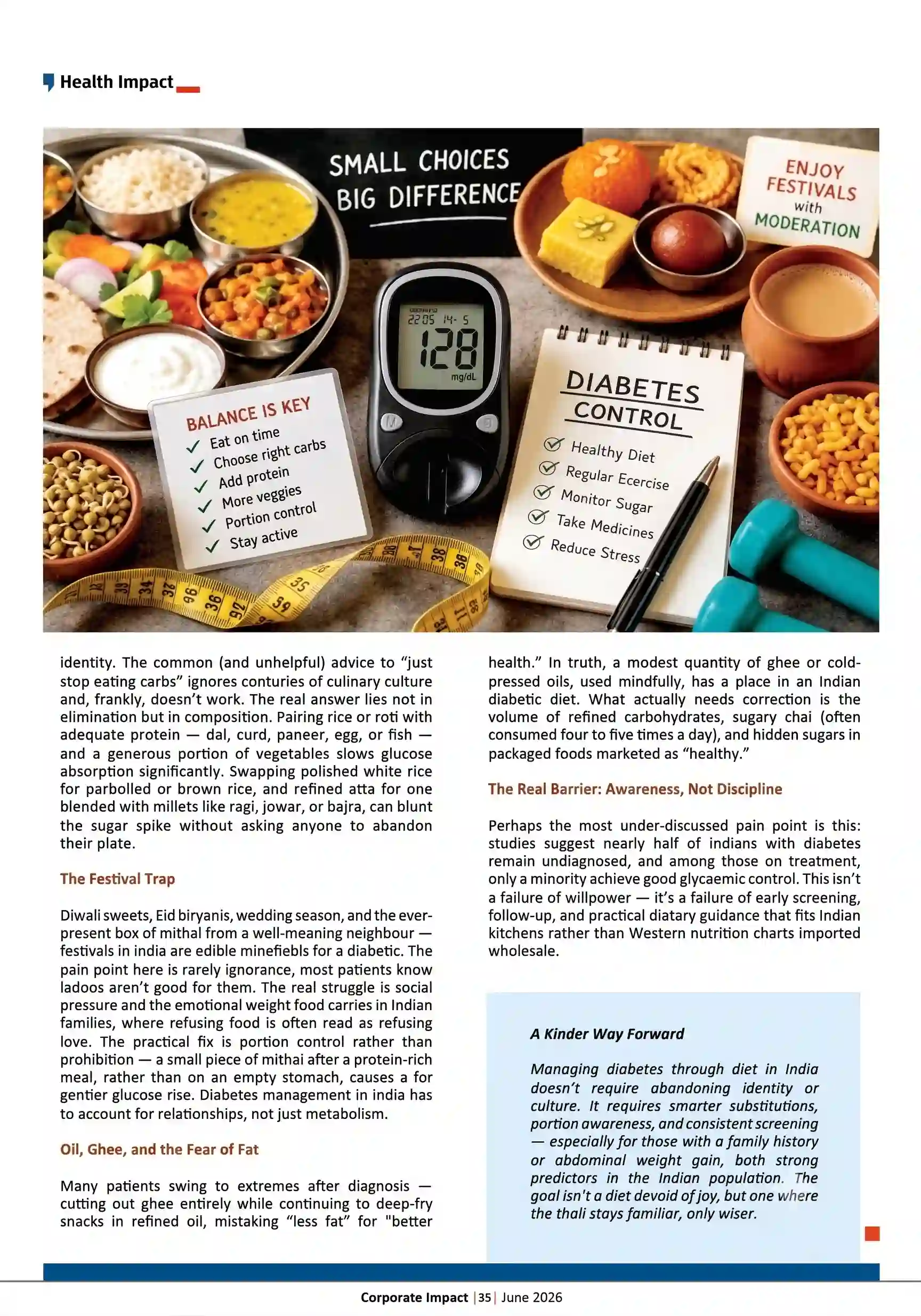
Pairing rice or roti with adequate protein—dal, curd, paneer, egg, or fish—and a generous portion of vegetables slows glucose absorption significantly.
Swapping polished white rice for parboiled or brown rice, and refined atta for one blended with millets like ragi, jowar, or bajra, can blunt the sugar spike without asking anyone to abandon their plate.
The Festival Trap
Diwali sweets, Eid biryanis, wedding season, and the ever-present box of mithai from a well-meaning neighbour—festivals in India are edible minefields for a diabetic.
The pain point here is rarely ignorance; most patients know ladoos aren't good for them.
The real struggle is social pressure and the emotional weight food carries in Indian families, where refusing food is often read as refusing love.
The practical fix is portion control rather than prohibition—a small piece of mithai after a protein-rich meal, rather than on an empty stomach, causes a far gentler glucose rise.
Diabetes management in India has to account for relationships, not just metabolism.
Oil, Ghee, and the Fear of Fat
Many patients swing to extremes after diagnosis—cutting out ghee entirely while continuing to deep-fry snacks in refined oil, mistaking "less fat" for "better health."
In truth, a modest quantity of ghee or cold-pressed oils, used mindfully, has a place in an Indian diabetic diet.
What actually needs correction is the volume of refined carbohydrates, sugary chai (often consumed four to five times a day), and hidden sugars in packaged foods marketed as "healthy."
The Real Barrier: Awareness, Not Discipline
Perhaps the most under-discussed pain point is this: studies suggest nearly half of Indians with diabetes remain undiagnosed, and among those on treatment, only a minority achieve good glycaemic control.
This isn't a failure of willpower—it's a failure of early screening, follow-up, and practical dietary guidance that fits Indian kitchens rather than Western nutrition charts imported wholesale.
A Kinder Way Forward
Managing diabetes through diet in India doesn't require abandoning identity or culture.
It requires smarter substitutions, portion awareness, and consistent screening—especially for those with a family history or abdominal weight gain, both strong predictors in the Indian population.
The goal isn't a diet devoid of joy, but one where the thali stays familiar, only wiser.
Dr. Shilika Lalwani
MD, DrNB Endocrinologist & Metabolism (Adult & Pediatric)
Dr.shilikalalwani@gmail.com
Oraya Clincis, Raipur