









































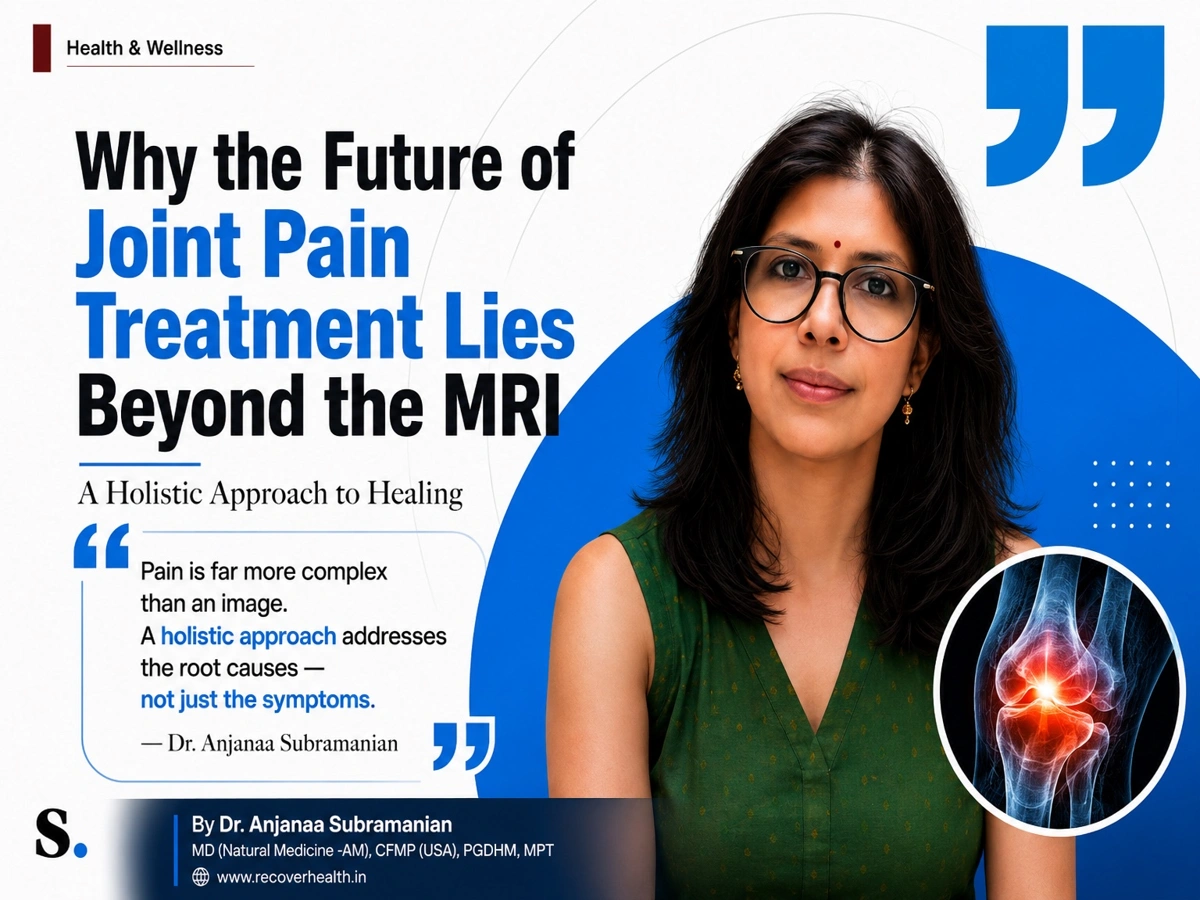
Why the Future of Joint Pain Treatment Lies Beyond the MRI
Every week, patients walk into my clinic carrying an MRI report and a sense of resignation. They have often been told that knee replacement surgery is inevitable. Some are in their forties or fifties. Many have never undergone a structured rehabilitation program. Few have been assessed for muscle weakness, metabolic dysfunction, chronic inflammation, or the lifestyle factors that may be contributing to their pain.
In many cases, the scan has become the diagnosis.
Yet pain is far more complex than an image.
Modern research has revealed an important paradox in osteoarthritis. The severity of arthritis seen on an X-ray or MRI often correlates poorly with the amount of pain a person experiences. Some individuals with advanced joint degeneration report minimal symptoms, while others with relatively mild structural changes experience severe pain and disability. This suggests that cartilage loss alone cannot explain the entire story.
One of the most overlooked contributors to joint pain is muscle weakness. The quadriceps, gluteal muscles, and core musculature play a critical role in stabilising and protecting the knee joint. Research has consistently shown that reduced muscle strength is associated with increased pain, impaired mobility, and faster progression of osteoarthritis. Muscles act as the body's natural shock absorbers. When they weaken, the joint is forced to absorb greater mechanical stress.
Body composition also matters. Excess body fat does more than increase the load on weight-bearing joints. Adipose tissue is now recognised as a metabolically active organ that releases inflammatory compounds known as adipokines. These substances contribute to systemic inflammation and may accelerate joint degeneration. This is one reason why obesity is considered both a mechanical and inflammatory risk factor for osteoarthritis.
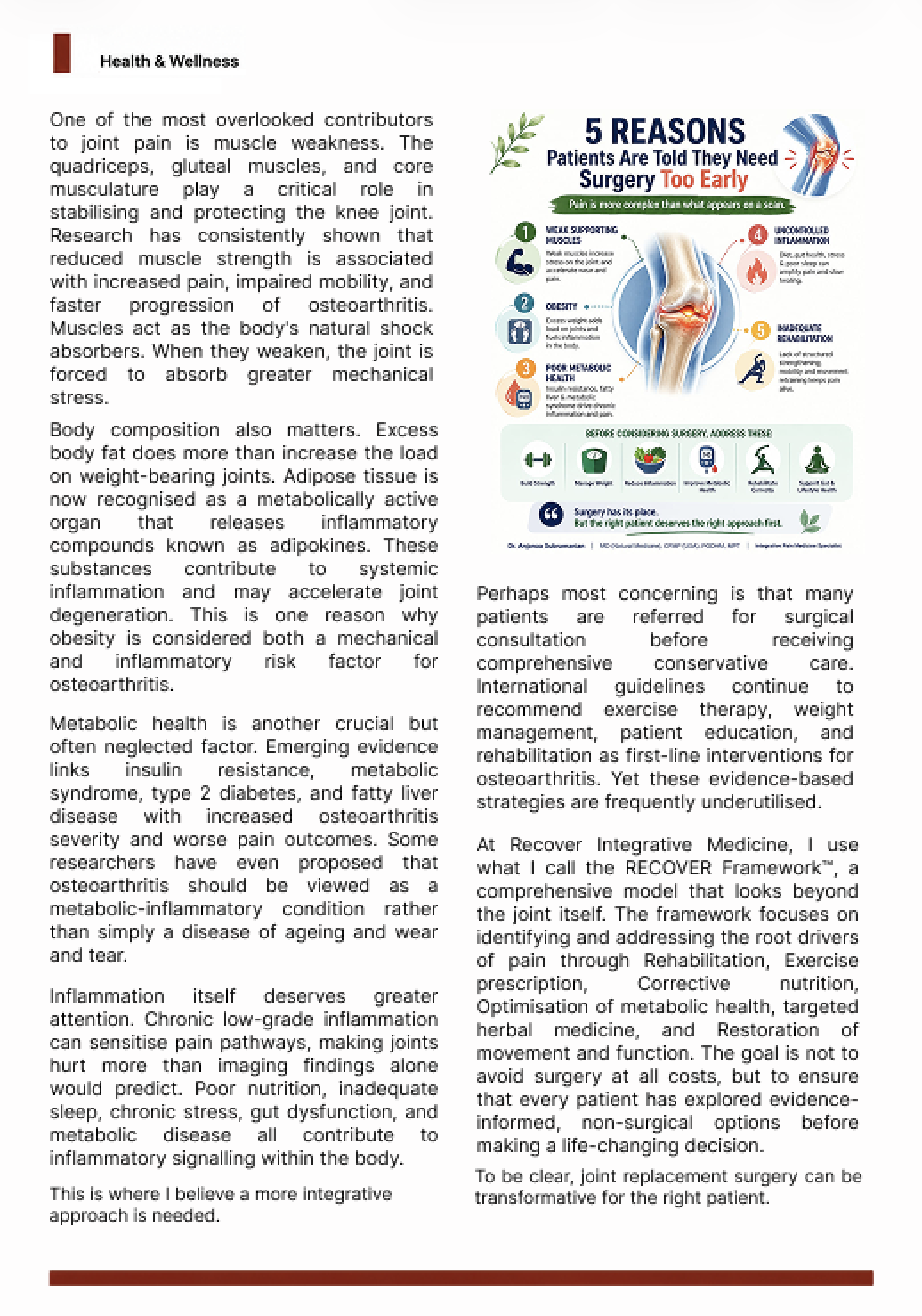
Metabolic health is another crucial but often neglected factor. Emerging evidence links insulin resistance, metabolic syndrome, type 2 diabetes, and fatty liver disease with increased osteoarthritis severity and worse pain outcomes. Some researchers have even proposed that osteoarthritis should be viewed as a metabolic-inflammatory condition rather than simply a disease of ageing and wear and tear.
Inflammation itself deserves greater attention. Chronic low-grade inflammation can sensitise pain pathways, making joints hurt more than imaging findings alone would predict. Poor nutrition, inadequate sleep, chronic stress, gut dysfunction, and metabolic disease all contribute to inflammatory signalling within the body.
Perhaps most concerning is that many patients are referred for surgical consultation before receiving comprehensive conservative care. International guidelines continue to recommend exercise therapy, weight management, patient education, and rehabilitation as first-line interventions for osteoarthritis. Yet these evidence-based strategies are frequently underutilised.
This is where I believe a more integrative approach is needed.
At Recover Integrative Medicine, I use what I call the RECOVER Framework™, a comprehensive model that looks beyond the joint itself. The framework focuses on identifying and addressing the root drivers of pain through Rehabilitation, Exercise prescription, Corrective nutrition, Optimisation of metabolic health, targeted herbal medicine, and Restoration of movement and function. The goal is not to avoid surgery at all costs, but to ensure that every patient has explored evidence-informed, non-surgical options before making a life-changing decision.
To be clear, joint replacement surgery can be transformative for the right patient. There are situations where surgery is absolutely necessary and appropriate. However, before deciding that surgery is the only answer, it is worth asking whether muscle strength, body composition, metabolic health, inflammation, and rehabilitation have been fully addressed.
Sometimes the joint is the problem.
But often, the biology surrounding the joint is equally important.
The future of pain medicine lies not merely in replacing joints, but in understanding why they became painful in the first place.
Dr. Anjanaa Subramanian
MD (Natural Medicine -AM), CFMP (USA), PGDHM, MPT
www.recoverhealth.in