
















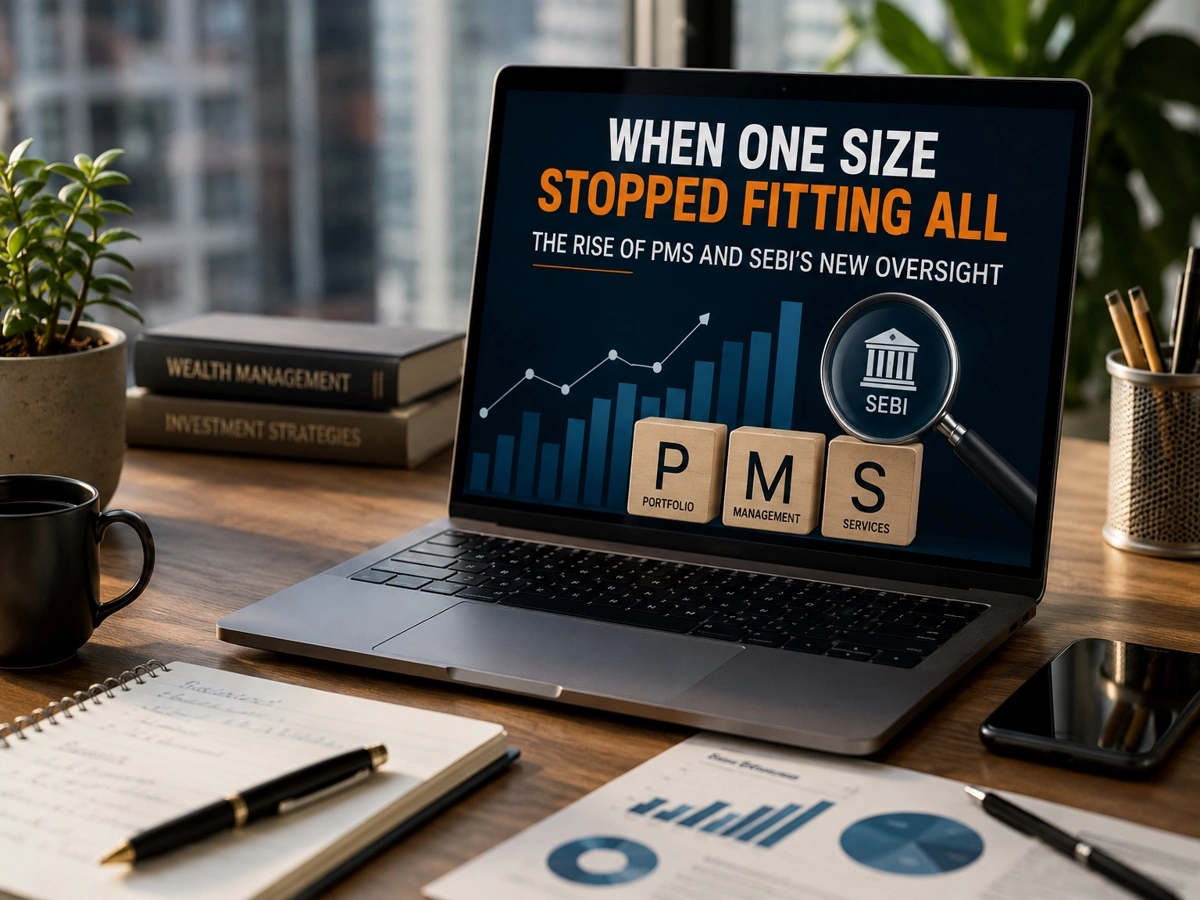










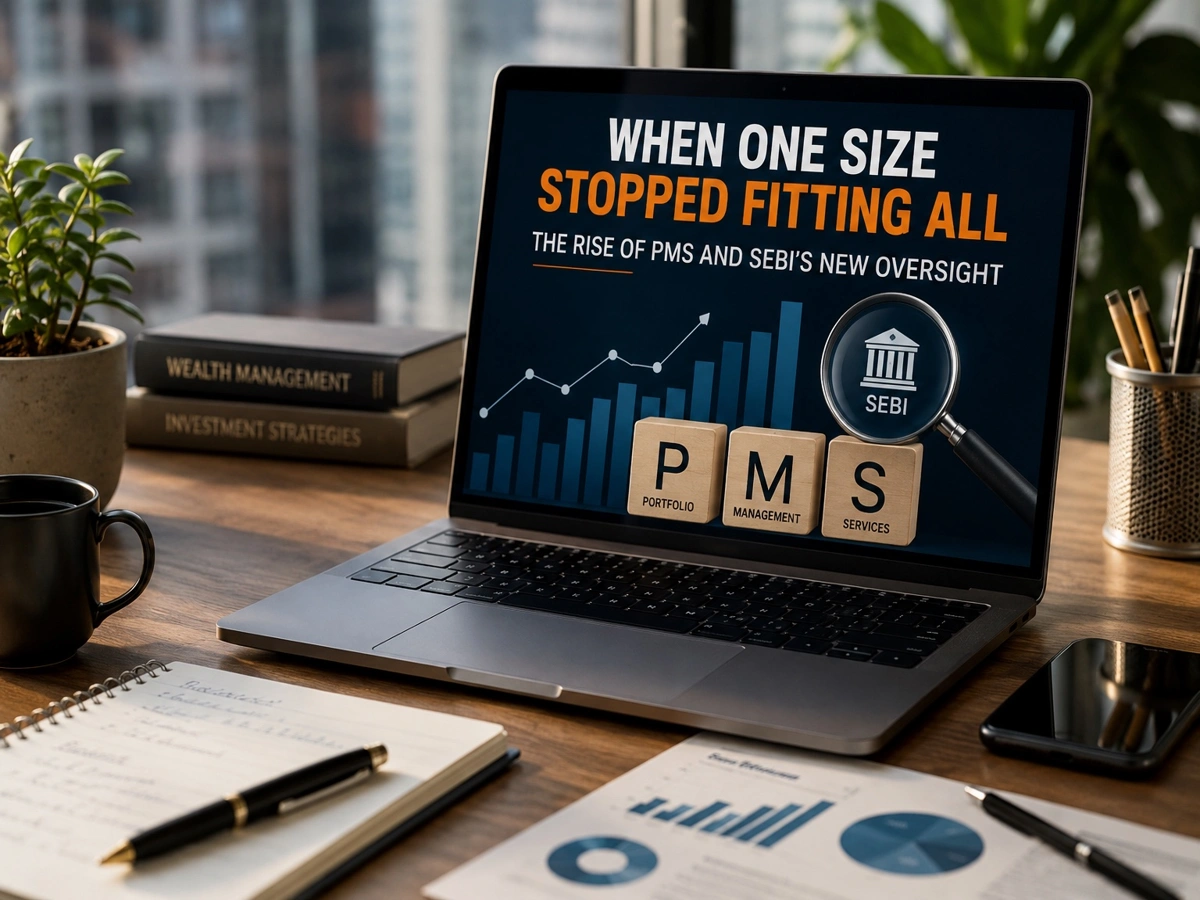
When One Size Stopped Fitting All
The Rise of PMS and SEBI’s New Oversight
For decades, Indian investors largely had two choices when deciding where to place their money: fixed deposits or mutual funds.
Fixed deposits offered safety and predictability but often struggled to keep pace with inflation. Mutual funds provided access to market-linked returns but followed a pooled investment model where thousands of investors participated in a single strategy.
For many investors, that approach worked well.
But for a growing segment of affluent Indians, it no longer felt sufficient.
The Search for Personalization
An investor with ₹50 lakh or more does not always want to be part of a broad investment pool managed through a standardized strategy.
Increasingly, these investors began looking for something more personalized.
They wanted investment portfolios designed around their specific goals, risk appetite, financial circumstances, and long-term objectives.
That demand gave rise to the growing popularity of Portfolio Management Services (PMS).
Unlike traditional mutual funds, PMS offers:
- Customized investment strategies
- Direct ownership of securities
- Individual demat accounts
- Tailored risk-return management
- Greater flexibility in portfolio construction
In simple terms, PMS offered investors a portfolio built around them rather than around the masses.
The Money Followed
As India’s financial ecosystem matured and household savings increasingly moved toward market-linked assets, PMS began attracting significant capital.
The trend became especially visible across major financial centers such as Mumbai, Delhi, Bengaluru, Hyderabad, and Pune.
High-net-worth individuals (HNIs) started allocating larger portions of their wealth to customized investment products.
The results were remarkable.
Industry assets under management expanded from approximately ₹5 lakh crore in FY21 to ₹10.5 lakh crore by FY26.
Such growth reflected not only rising wealth but also changing investor expectations.
Investors were no longer satisfied with generic solutions.
They wanted personalization, transparency, and greater control.
The Regulatory Challenge
Rapid growth often brings new challenges.
SEBI’s PMS framework was originally developed in a very different market environment.
When the framework was introduced, the PMS industry was considerably smaller and less complex.
As the sector expanded, several concerns emerged:
- Lack of uniform performance benchmarking
- Difficulty comparing PMS providers fairly
- Inconsistent reporting practices
- Potential risks of mis-selling
- Varying governance standards
Without standardized disclosures and reporting structures, investors sometimes struggled to make informed comparisons between different PMS offerings.
SEBI Steps In
Recognizing these challenges, the Securities and Exchange Board of India (SEBI) began evaluating ways to strengthen the ecosystem.
On February 23, 2026, during the PMS Conclave in Mumbai, SEBI Chairman Tuhin Kanta Pandey outlined a new direction for the industry.
The regulator focused on three key priorities:
Stronger Governance
Improving accountability, transparency, and operational standards across PMS providers.
Responsible Use of Technology
Encouraging innovation while ensuring investor interests remain protected.
Better AUM Management and Reporting
Creating more disciplined systems for tracking, reporting, and benchmarking portfolio performance.
The message from the regulator was straightforward:
The PMS industry had matured.
Now its governance structures needed to mature as well.
What It Means for Investors
For investors, these developments represent a positive shift.
The new measures are expected to provide:
- Greater transparency
- Clearer performance comparisons
- Better disclosure standards
- Stronger investor safeguards
- Increased confidence in PMS products
Investors will be better equipped to evaluate managers based on comparable metrics rather than relying solely on marketing claims.
What It Means for the Industry
For PMS providers, the new environment may create challenges but also opportunities.
Firms that relied on unclear reporting practices or performance ambiguity may face increased scrutiny.
However, firms with strong governance frameworks, disciplined investment processes, and transparent reporting systems are likely to benefit.
As standards improve, trust in the industry is expected to deepen.
Ultimately, stronger regulation may help create a more resilient and sustainable PMS ecosystem.
The Future of Customized Investing
The rise of PMS reflects a broader shift in investor behavior.
As wealth grows and financial literacy improves, investors increasingly expect solutions tailored to their unique needs rather than standardized products designed for the average customer.
Customization is no longer a luxury.
For many affluent investors, it has become an expectation.
The third option is no longer quiet.
And now, neither is the regulator.
As PMS enters its next phase of growth, transparency, accountability, and investor protection will likely define the future of India’s personalized investment landscape.