


























When Brent Crude Meets the Baraat
By Rashmeet Kaur Chawla
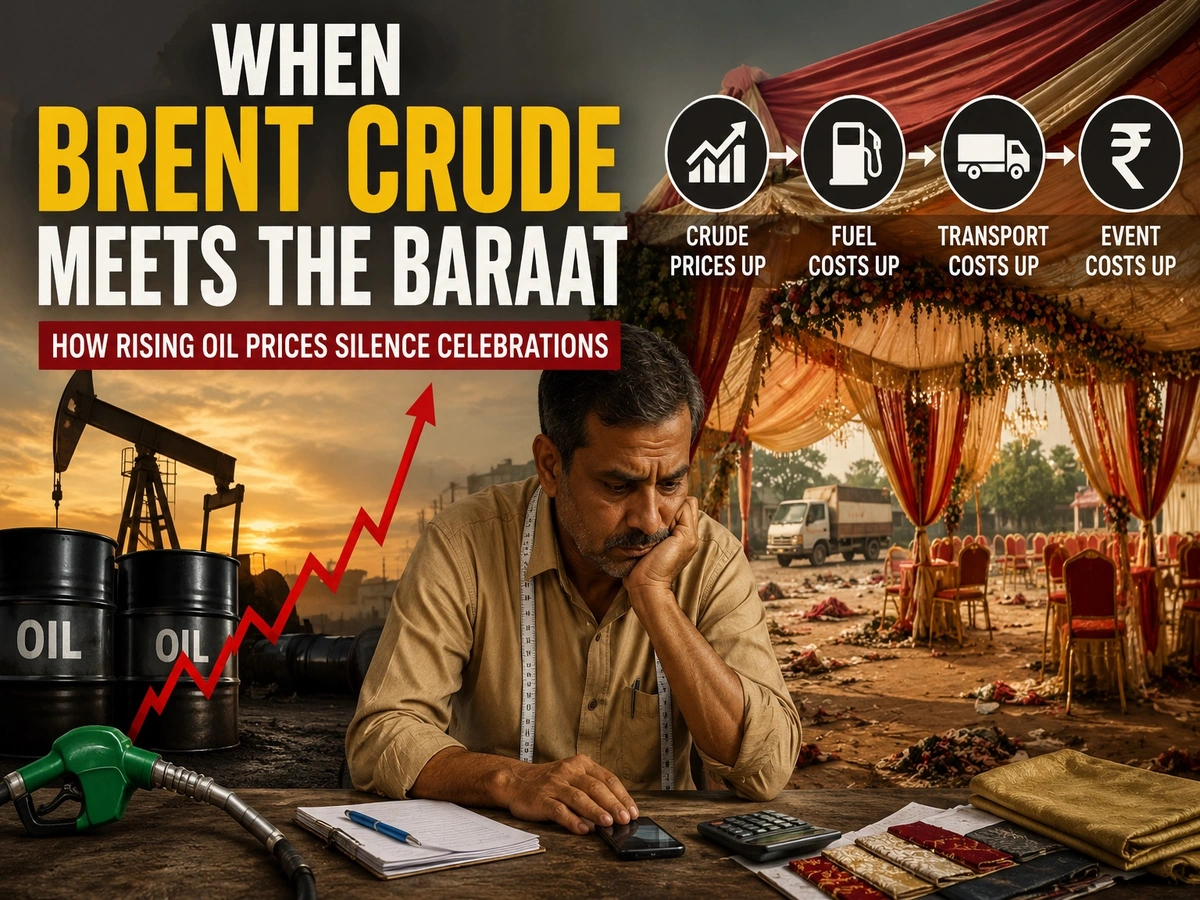
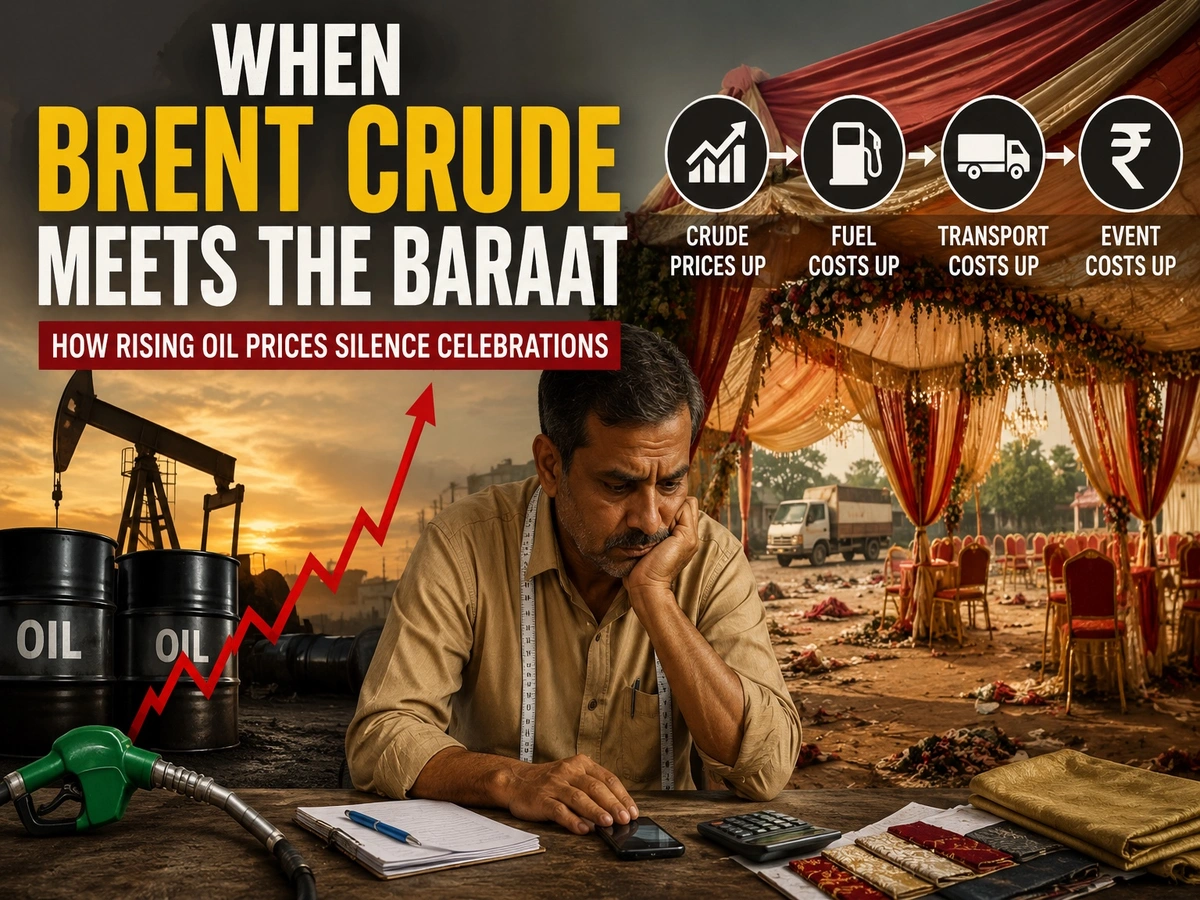
My father runs a tent house business.
He sets up the lights, furniture, decorations, and infrastructure that transform empty spaces into wedding venues, birthday celebrations, and community gatherings. For years, his work followed a predictable rhythm. Every week brought new bookings, new events, and new opportunities.
Recently, however, the phone has become quieter.
Not silent.
Just quieter.
And that silence has a name: inflation.
The Cost of Celebration
A month ago, multiple inquiries arrived every week. Weddings, birthdays, family functions, and social gatherings generated steady business. Each event represented meaningful income for workers, suppliers, transport providers, and local vendors.
Today, people are reconsidering their spending.
The wedding becomes smaller.
The guest list becomes shorter.
The birthday party becomes simpler.
Not because families want less joy, but because everything else has become more expensive.
The grocery bill has increased.
Transportation costs have risen.
Household budgets have tightened.
And when expenses grow, celebrations are often the first thing people cut back on.
The Conflict That Started Far Away
At first glance, it seems strange that a tent house in an Indian city would be affected by a conflict unfolding thousands of kilometers away.
The answer lies in oil.
The ongoing tensions across West Asia, including the Iran-Israel conflict and broader regional instability, have placed significant pressure on global energy markets.
Whenever geopolitical uncertainty threatens oil-producing regions, crude oil prices rise.
For India, that matters enormously.
Why Oil Matters to India
India imports approximately 85 percent of its crude oil requirements, making it one of the world’s largest energy importers.
Brent Crude serves as one of the primary global benchmarks for oil pricing. When Brent prices rise, India’s import bill rises as well.
Over the last few years, India diversified its sourcing strategy. Following the Russia-Ukraine conflict, India increased purchases of discounted Russian crude, which now accounts for a substantial portion of imports.
While discounted oil provides some protection, it cannot completely shield the economy from global price increases.
When Brent rises, costs rise throughout the supply chain.
The Ripple Effect
The impact begins with transportation.
The truck carrying tent poles costs more to operate.
The supplier delivering decorations pays higher fuel expenses.
Workers spend more commuting to job sites.
Raw materials become more expensive to transport between cities.
Every participant in the supply chain absorbs additional costs.
Eventually, those costs reach the customer.
And when customers face higher living expenses, discretionary spending declines.
The result is visible in businesses like my father’s.
Fewer bookings.
Smaller events.
Lower margins.
And longer gaps between phone calls.
Government Measures and Their Limits
The government has taken steps to cushion consumers from extreme fuel price volatility.
Unlike some Western markets where retail fuel prices move rapidly with global benchmarks, India follows a partially regulated approach that smooths fluctuations.
This has prevented even sharper increases at the fuel pump.
However, no policy can entirely eliminate the economic impact of rising import costs.
Transportation remains more expensive.
Logistics remain costlier.
Supply chains continue to feel pressure.
The effects spread slowly but persistently through the economy.
Inflation and the RBI
As inflationary pressures build, monetary policy becomes increasingly important.
The Reserve Bank of India must balance economic growth with price stability.
According to the RBI’s Annual Report 2025–26, inflation is projected to remain elevated, requiring careful policy management.
In its June 2026 meeting, the RBI maintained the repo rate at 5.25 percent, signaling caution amid uncertain global energy markets.
Higher interest rates help control inflation but also increase borrowing costs.
Businesses may delay expansion.
Consumers may postpone spending.
Economic activity may grow more slowly.
Investors may face lower valuation multiples as higher inflation increases the cost of capital.
Beyond the Numbers
For economists, inflation is measured through percentages and policy reports.
For investors, it affects returns and valuations.
For businesses, it influences profitability.
For ordinary families, however, inflation feels much simpler.
It is the rising grocery bill.
The expensive petrol refill.
The increasing school fee.
The postponed celebration.
The cancelled event.
The smaller wedding.
And sometimes, it is the silence between phone calls.
The Real Lesson
The story of inflation is not only about economics.
It is about interconnectedness.
A conflict in West Asia influences oil prices.
Oil prices influence transportation costs.
Transportation costs influence business expenses.
Business expenses influence consumer behavior.
And consumer behavior ultimately affects livelihoods across the country.
The journey from Brent Crude to the Baraat may seem long.
But in today’s interconnected world, it is much shorter than we think.