








































From Hospitals to the Care Economy: Why Employer Leadership Must Shape South Asia’s Care Future
A Regional Conversation on the Future of Care
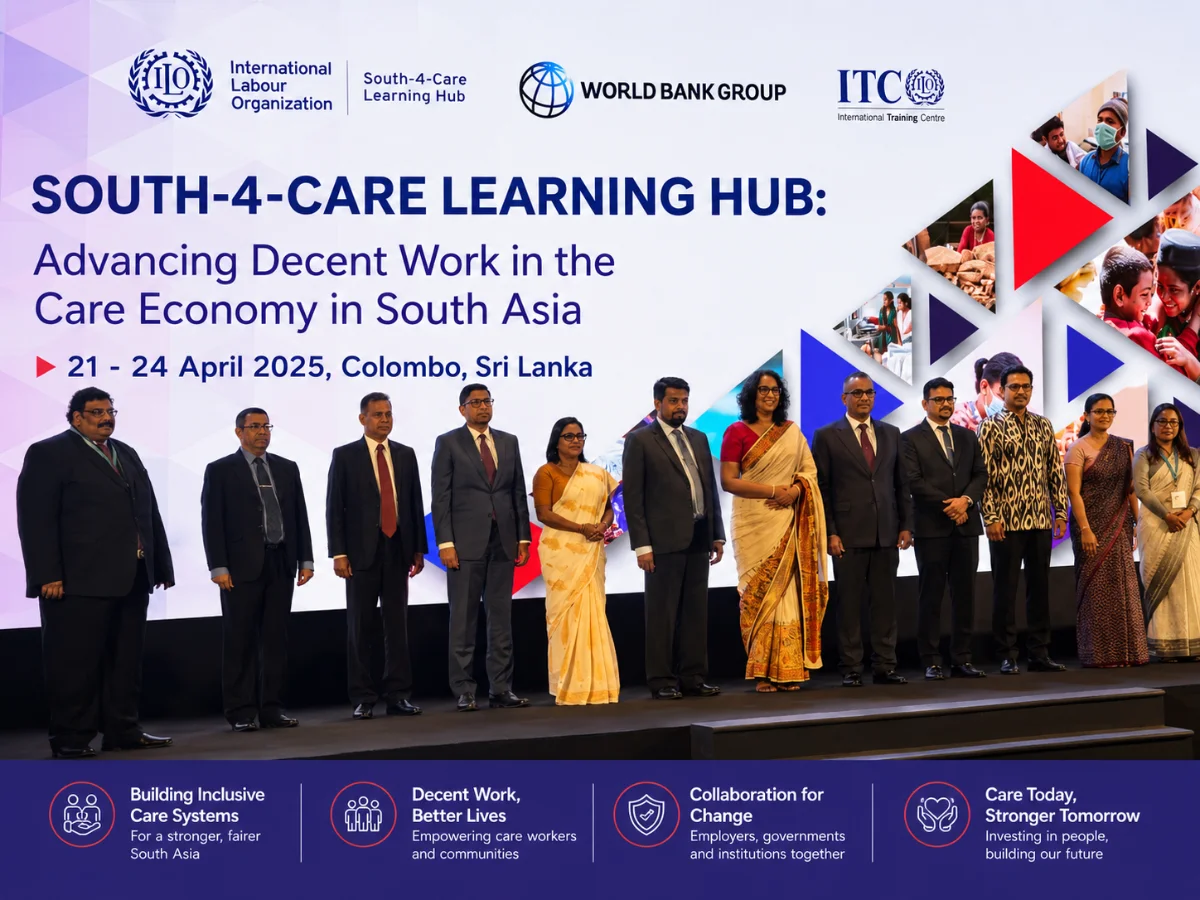
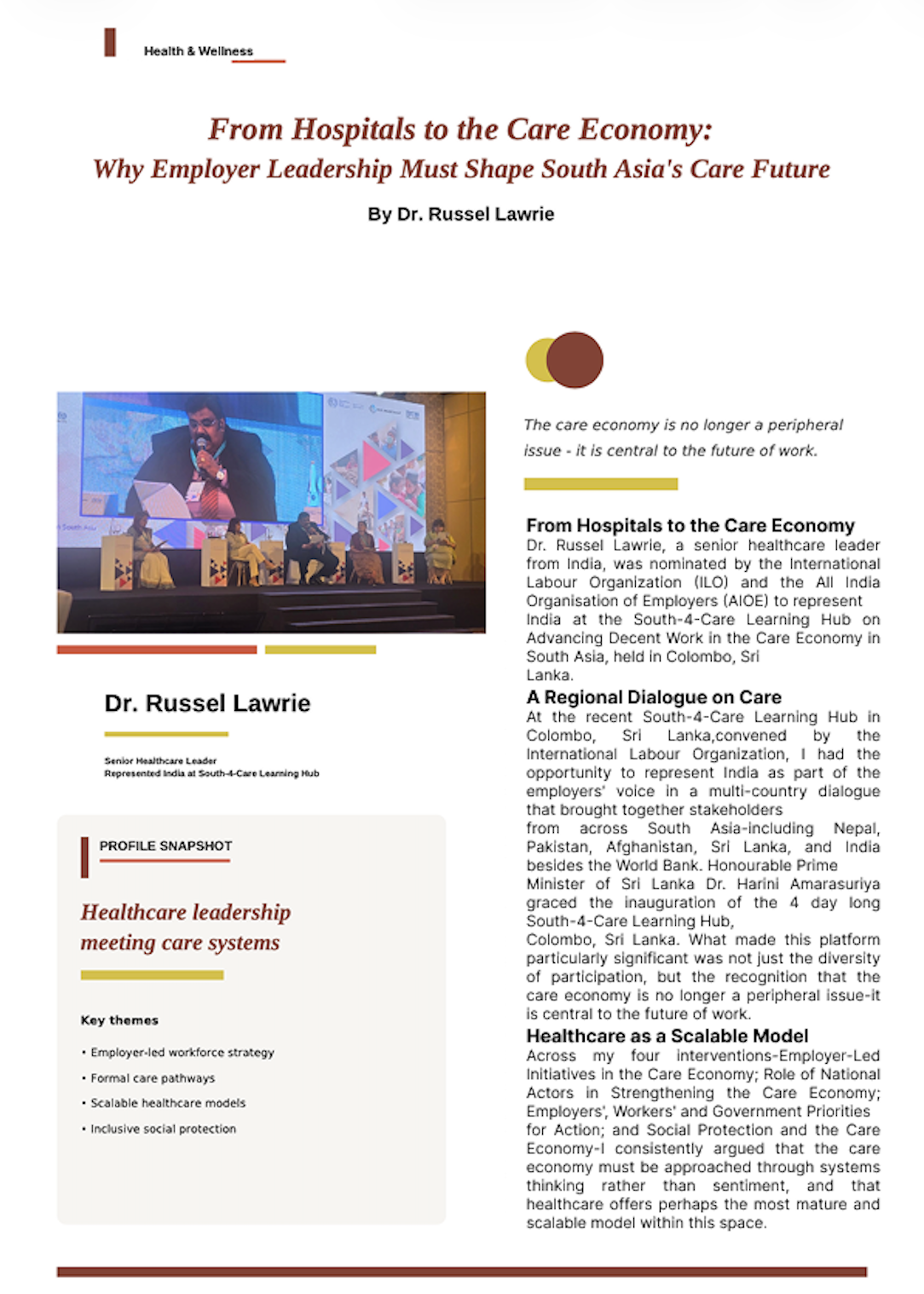
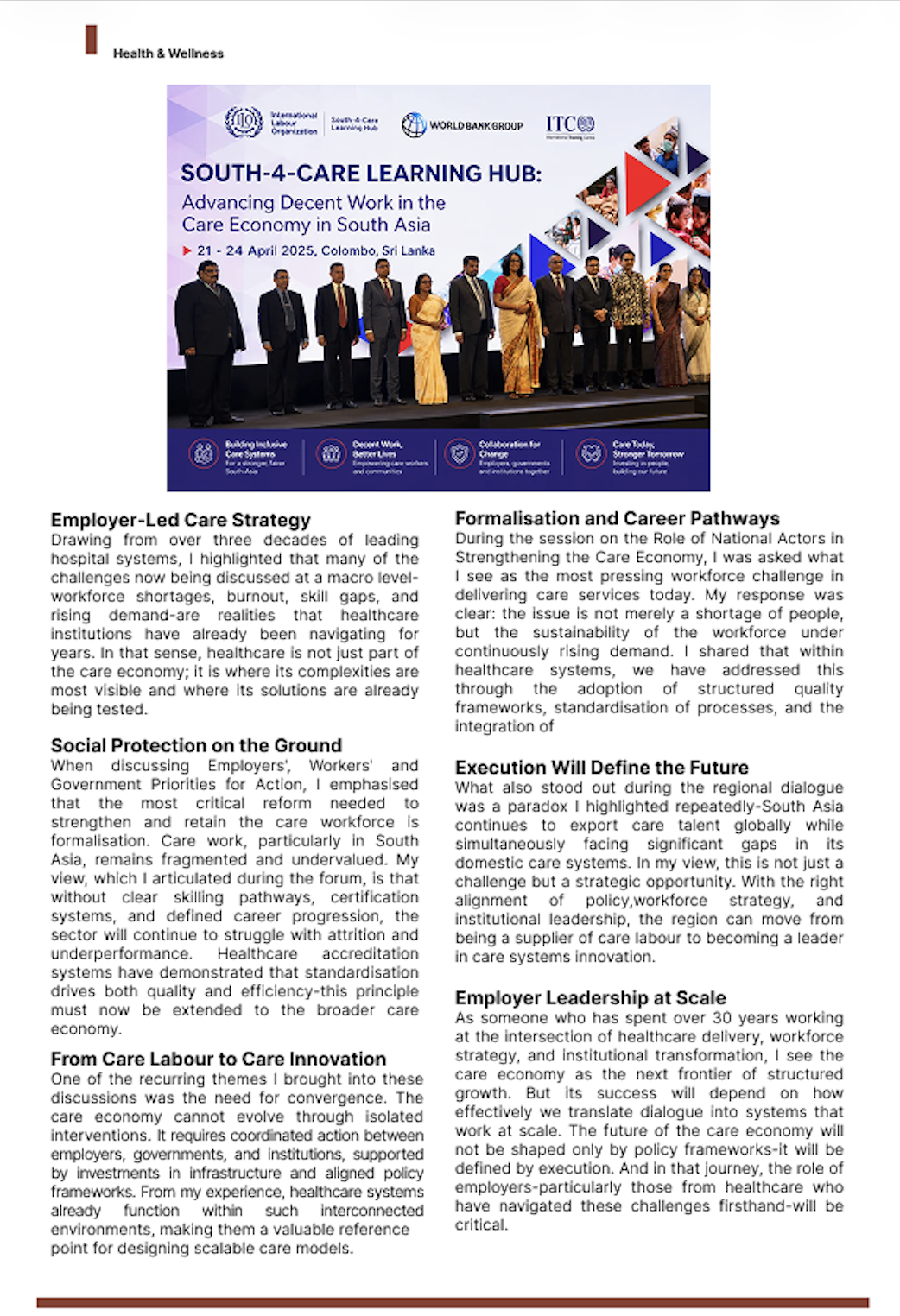
The care economy is no longer viewed as a secondary social issue — it is becoming one of the defining pillars of the future workforce across South Asia. At the South-4-Care Learning Hub held in Colombo, Sri Lanka, healthcare leaders, policymakers, employers, and global institutions came together to discuss the future of decent work in the care economy.
Representing India as part of the employers’ delegation, Dr. Russel Lawrie shared critical insights on how healthcare systems can help shape scalable and sustainable care models across the region.
Why Healthcare Offers the Strongest Care Model
Healthcare systems have already been managing many of the challenges that are now emerging across the wider care economy, including:
- Workforce shortages
- Employee burnout
- Rising service demand
- Skill gaps
- Care quality management
- Workforce sustainability
According to Dr. Lawrie, healthcare is not simply part of the care economy — it is one of the sectors where the complexities and solutions are already most visible.
Employer Leadership Must Drive Change
One of the key discussions focused on the role of employers in strengthening care systems. Dr. Lawrie emphasized that care should no longer be viewed only as a welfare responsibility but as a strategic workforce investment.
Employers must adopt:
- Structured workforce planning
- Flexible deployment models
- Process-driven efficiency systems
- Employee well-being strategies
- Long-term workforce sustainability plans
Governments also have an important role to play by supporting employers through policy incentives, co-funded care infrastructure, and enabling frameworks.
The Need for Workforce Formalization
A major challenge across South Asia’s care sector is the lack of formal systems for skill development and career progression. Many care workers continue to operate in fragmented and undervalued environments.
To strengthen the sector, there is a need for:
- Standardized training systems
- Certification pathways
- Career progression structures
- Quality and accreditation frameworks
Healthcare accreditation systems have already demonstrated how standardization can improve both efficiency and quality outcomes.
Social Protection and Ground Realities
Dr. Lawrie also highlighted the disconnect between policy design and real-world workforce conditions. Many care workers operate in informal or mobile environments where access to social protection remains limited.
Improving portability and inclusiveness within social protection systems will be essential to ensuring decent work conditions across the care economy.
South Asia’s Strategic Opportunity
South Asia continues to supply care talent globally while still facing major gaps within domestic care systems. This challenge also presents an opportunity.
With better coordination between governments, employers, and institutions, the region can evolve from being a supplier of care labour to becoming a global leader in care systems innovation.
Conclusion
The future of the care economy will depend not only on policy discussions but on practical execution. Sustainable growth will require workforce investment, institutional leadership, infrastructure development, and strong collaboration across sectors.
Healthcare systems already provide valuable lessons in managing workforce complexity, improving care delivery, and building scalable operational models. As the care economy continues to grow, employer leadership will remain central to shaping its long-term success.