







































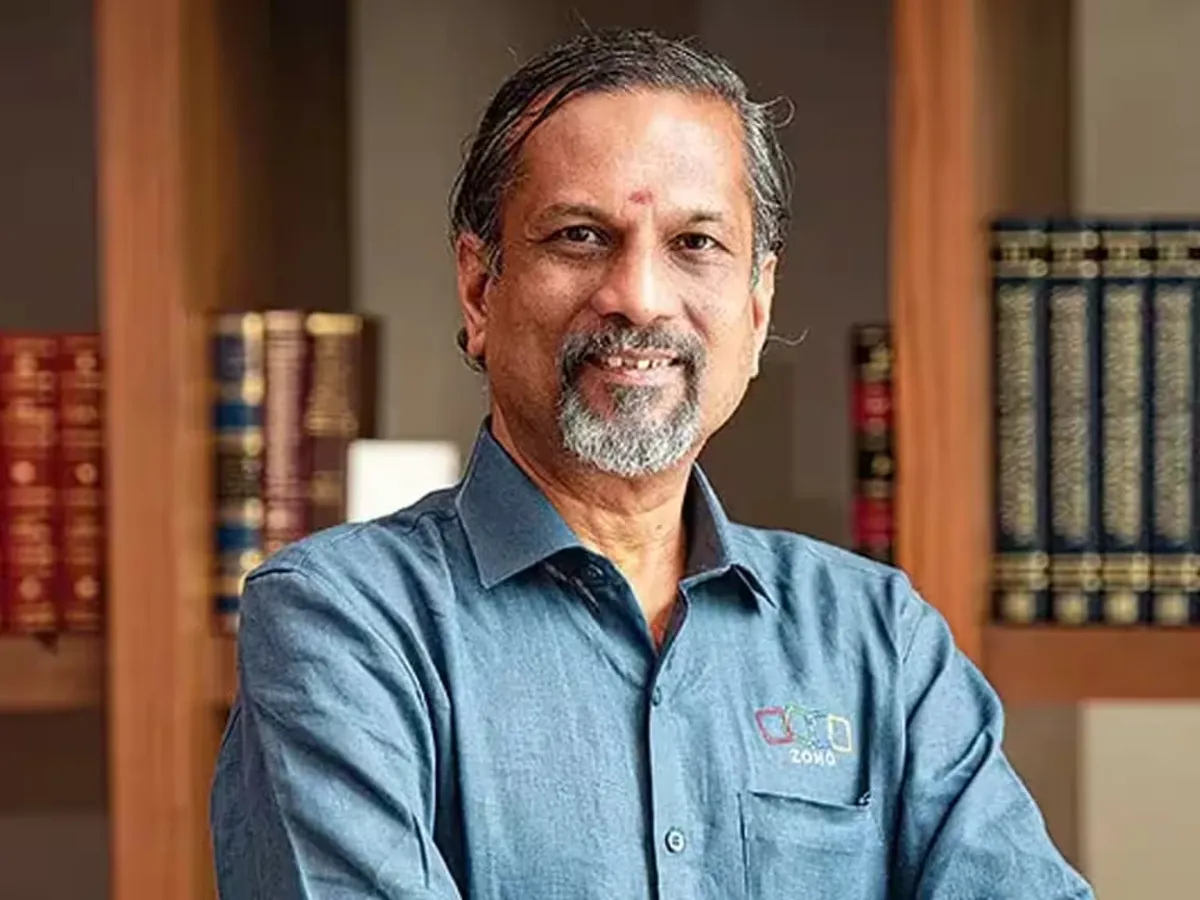
In an era where the tech industry is synonymous with aggressive venture capital, bloated valuations, and rapid cash burn, Zoho Corporation stands as a glaring anomaly. Founded in 1996, the company has grown into a global SaaS powerhouse with over 11,000 employees, millions of users across 180 countries, and billions in revenue—all without raising a single cent of external funding.
At the helm of this fiercely independent enterprise is Sridhar Vembu, a leader who traded the glitz of Silicon Valley for a village in Tamil Nadu. Vembu’s journey is not a standard playbook of unicorn success; it is a masterclass in resilience, long-term thinking, and principled leadership.

The Early Struggles: Surviving the Tech Winters
Zoho’s ascent was far from linear. In its early days (initially operating as AdventNet), the company built network management software primarily for telecom equipment vendors.
1. The Dot-Com Crash
The defining struggle of Vembu’s early career came during the dot-com bust of 2000-2001. As the telecom sector collapsed, AdventNet saw its client base evaporate almost overnight. Instead of panicking or seeking emergency buyouts, Vembu leaned into his core philosophy: survival through R&D. He utilized the company's conserved cash reserves to pivot away from telecom dependency, heavily investing the engineering team’s time into building broader enterprise IT management tools. This pivot eventually birthed ManageEngine, a critical cash cow that funded the broader Zoho software suite.
2. Rejecting the VC Temptation
During the initial years, the pressure to conform to the Silicon Valley standard—raising massive rounds to fuel hyper-growth—was immense. Vembu fundamentally rejected this. The struggle was psychological and strategic: turning down easy money to maintain control. He recognized that taking VC money meant adopting an "exit-focused" mindset, which fundamentally clashed with his vision of building a generational company.

The Foundational Principles of Building Zoho
Vembu’s approach to business is often described as applied economics intertwined with social responsibility. His success is anchored in a few uncompromising principles:
1. Frugality and Customer-Funded Growth
For Vembu, the best investors are paying customers. By focusing relentlessly on delivering immediate value, Zoho generated cash from day one. In the early years, Vembu avoided all corporate luxuries, living frugally to plow every available dollar back into software development. This self-sustaining loop allowed Zoho to balance its books, remain debt-free, and scale at a sustainable pace.
2. Deep R&D and Vertical Integration
Rather than outsourcing or relying heavily on third-party infrastructure, Vembu believes in building deeply and comprehensively. This vertical integration allows Zoho to control its technological destiny, keep costs low for end-users, and maintain massive profit margins. He often argues that true innovation—akin to developing proprietary hardware or core infrastructure—requires patient, long-term R&D that is impossible under the quarterly pressure of public markets or VC boards.
3. Principled Localism and Rural Development
Perhaps Vembu's most famous principle is his commitment to rural empowerment. Dissatisfied with the urban congestion and the brain drain from rural India, he pioneered the "hub-and-spoke" office model, moving Zoho's operations deep into Tier 2, 3, and 4 towns.
- Untapped Talent: He established Zoho Schools of Learning to recruit high school graduates, favoring aptitude and hunger over elite college degrees.
- Rootedness: Vembu argues that companies must remain connected to their cultural and geographical roots to build true economic resilience, a stark contrast to the highly globalized, detached supply chains of the modern tech world.
4. Long-Term Vision Over Quarterly Earnings
Vembu frequently criticizes the modern business school ideology that obsesses over short-term EPS (Earnings Per Share) growth. By keeping Zoho private, he bought the ultimate luxury: time. The company operates on five- or ten-year horizons, focusing on sustainable growth, employee well-being, and continuous product iteration without the stress of meeting artificial financial targets.

The Legacy of a Quiet Giant
Sridhar Vembu’s story is a powerful counter-narrative to modern startup culture. It proves that a company can be highly profitable, socially responsible, and globally dominant simply by staying true to fundamental business principles: build a great product, charge a fair price, respect your employees, and never spend money you haven't earned.