










































Surgery no longer has to mean prolonged pain or extended recovery. With advancements like robotic-assisted surgery, patients today can benefit from safer procedures, faster healing, and better quality of life after surgery.
Dr. Rajesh Sinha
Laser, Laparoscopic & Robotic GI Surgeon
NH MMI Hospital, Raipur
Dr. Rajesh Sinha is the best Gastro, Robotic and Laparoscopic Surgeon in Raipur. He is a highly skilled and experienced surgeon in robotic surgery and laparoscopic surgery. Dr. Sinha has 25 years of experience and records of over 10,000 successful surgeries in the years of his experience as a surgeon—a surgeon with exceptional solutions in medical health care and surgical solutions for better recovery of his patients.
Dr. Sinha is one of Raipur’s best and most trusted doctors for robotic and Laparoscopic surgery. His expertise is minimally invasive procedures and robotic surgery, where he holds the esteemed certification of FALS (Fellowship in Advanced Laparoscopic Surgery).
https://drrajeshsinha.in
Contact: +91 99938 20657
When surgery is advised, it is natural for patients and families to feel anxious. Questions about pain, recovery time, safety, and long-term outcomes often come to mind. Over the years, surgical techniques have evolved significantly to make procedures safer and recovery faster. One such advancement is robotic-assisted surgery.
Robotic surgery is not about machines replacing doctors. It is a modern surgical method where the surgeon uses advanced technology to perform procedures with greater precision, control, and safety.
What Is Robotic Surgery?
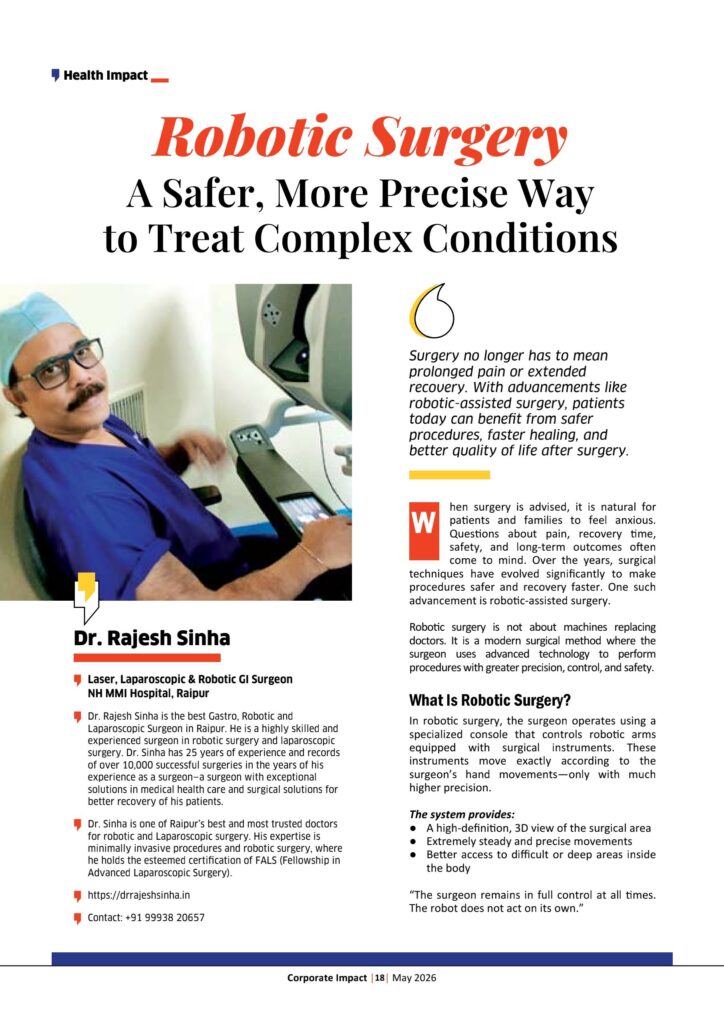
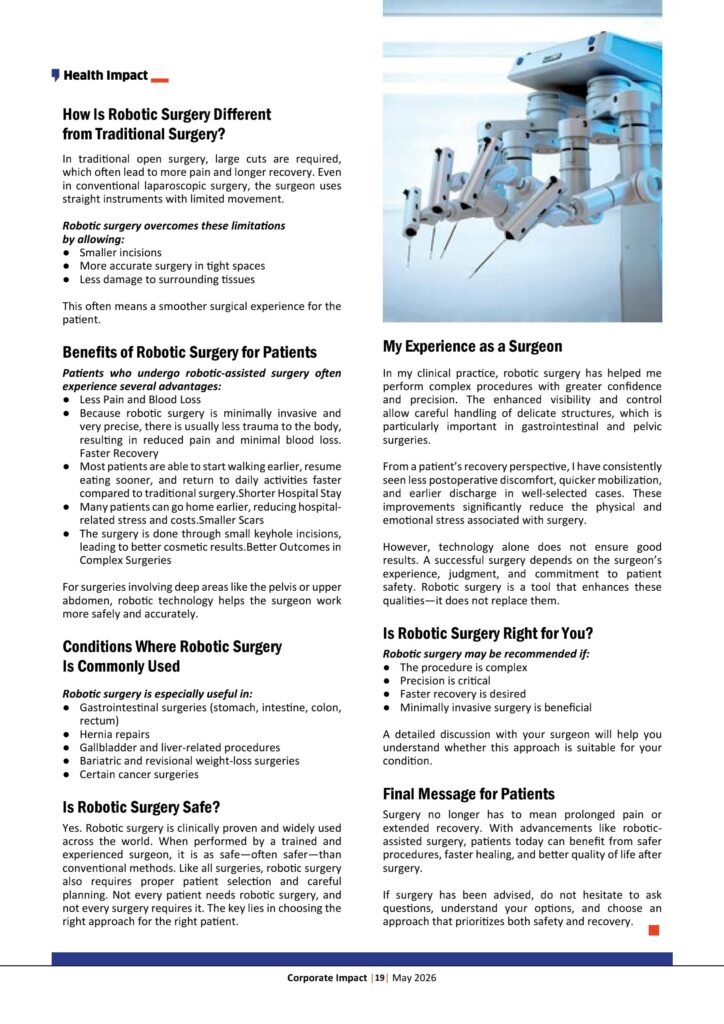
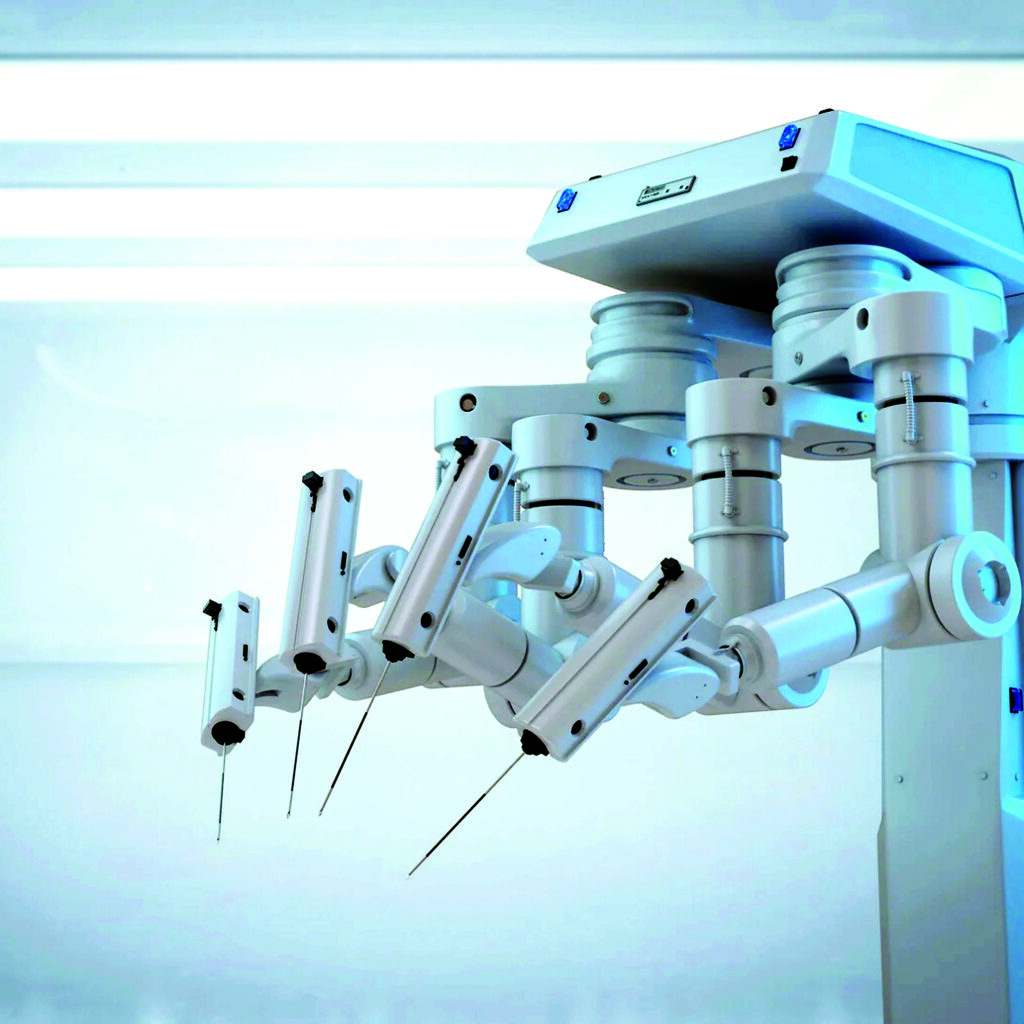
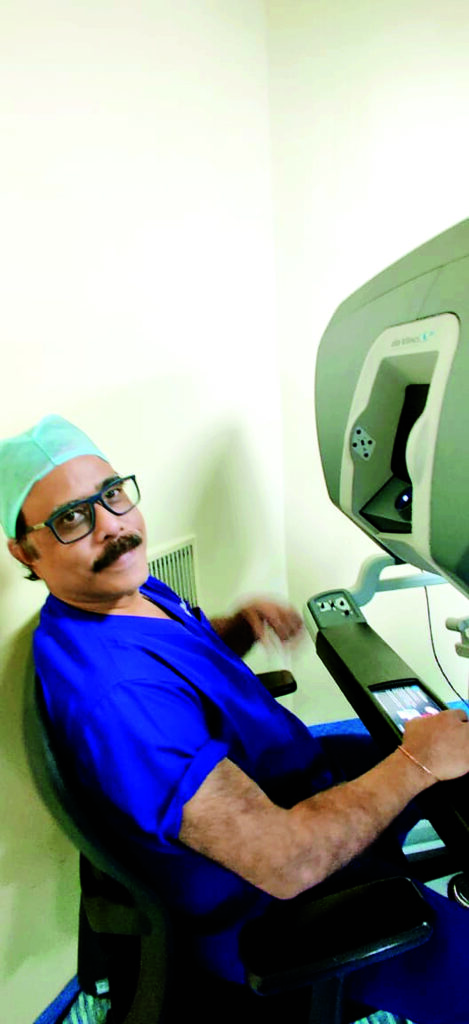
In robotic surgery, the surgeon operates using a specialized console that controls robotic arms equipped with surgical instruments. These instruments move exactly according to the surgeon’s hand movements—only with much higher precision.
The system provides:
● A high-definition, 3D view of the surgical area
● Extremely steady and precise movements
● Better access to difficult or deep areas inside the body
“The surgeon remains in full control at all times. The robot does not act on its own.”
How Is Robotic Surgery Different
from Traditional Surgery?
In traditional open surgery, large cuts are required, which often lead to more pain and longer recovery. Even in conventional laparoscopic surgery, the surgeon uses straight instruments with limited movement.
Robotic surgery overcomes these limitations
by allowing:
● Smaller incisions
● More accurate surgery in tight spaces
● Less damage to surrounding tissues
This often means a smoother surgical experience for the patient.
Benefits of Robotic Surgery for Patients
Patients who undergo robotic-assisted surgery often experience several advantages:
● Less Pain and Blood Loss
● Because robotic surgery is minimally invasive and very precise, there is usually less trauma to the body, resulting in reduced pain and minimal blood loss.Faster Recovery
● Most patients are able to start walking earlier, resume eating sooner, and return to daily activities faster compared to traditional surgery.Shorter Hospital Stay
● Many patients can go home earlier, reducing hospital-related stress and costs.Smaller Scars
● The surgery is done through small keyhole incisions, leading to better cosmetic results.Better Outcomes in Complex Surgeries
For surgeries involving deep areas like the pelvis or upper abdomen, robotic technology helps the surgeon work more safely and accurately.
Conditions Where Robotic Surgery
Is Commonly Used
Robotic surgery is especially useful in:
● Gastrointestinal surgeries (stomach, intestine, colon, rectum)
● Hernia repairs
● Gallbladder and liver-related procedures
● Bariatric and revisional weight-loss surgeries
● Certain cancer surgeries
Is Robotic Surgery Safe?
Yes. Robotic surgery is clinically proven and widely used across the world. When performed by a trained and experienced surgeon, it is as safe—often safer—than conventional methods. Like all surgeries, robotic surgery also requires proper patient selection and careful planning. Not every patient needs robotic surgery, and not every surgery requires it. The key lies in choosing the right approach for the right patient.
My Experience as a Surgeon
In my clinical practice, robotic surgery has helped me perform complex procedures with greater confidence and precision. The enhanced visibility and control allow careful handling of delicate structures, which is particularly important in gastrointestinal and pelvic surgeries.
From a patient’s recovery perspective, I have consistently seen less postoperative discomfort, quicker mobilization, and earlier discharge in well-selected cases. These improvements significantly reduce the physical and emotional stress associated with surgery.
However, technology alone does not ensure good results. A successful surgery depends on the surgeon’s experience, judgment, and commitment to patient safety. Robotic surgery is a tool that enhances these qualities—it does not replace them.
Is Robotic Surgery Right for You?
Robotic surgery may be recommended if:
● The procedure is complex
● Precision is critical
● Faster recovery is desired
● Minimally invasive surgery is beneficial
A detailed discussion with your surgeon will help you understand whether this approach is suitable for your condition.
Final Message for Patients
Surgery no longer has to mean prolonged pain or extended recovery. With advancements like robotic-assisted surgery, patients today can benefit from safer procedures, faster healing, and better quality of life after surgery.
If surgery has been advised, do not hesitate to ask questions, understand your options, and choose an approach that prioritizes both safety and recovery.